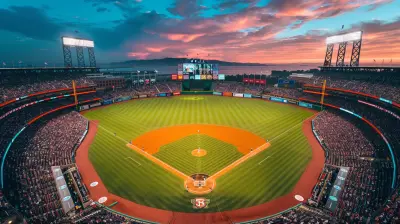
Bold Predictions for the 2026 NBA Finals
23 October 2026
The 2026 NBA Finals will not be a simple continuation of the recent championship script. The league is moving through a genuine power transfer. Aging dynasties are being pushed toward the edge of contention, young stars are entering their primes, and a new collective bargaining agreement is reshaping how front offices build rosters. Anyone who assumes the next Finals will look like the last few is ignoring the forces already at work.
This is not a mock draft of hot takes. It is a structured set of forecasts built on roster logic, salary cap mechanics, player development curves, and the way playoff basketball actually rewards specific skill sets. Some of these predictions will look aggressive. That is the point. But every one of them comes with reasoning you can examine, argue with, and use to form your own view of how the 2026 championship will be decided.
Why 2026 Is a Genuine Inflection Point
Before making any prediction, it helps to understand why this particular season matters more than most.The Second Apron Is Rewriting Roster Building
The new CBA's second apron penalties are no longer theoretical. Teams that spend deep into the luxury tax face frozen first-round picks, restricted trade flexibility, and a reduced ability to aggregate salaries in deals. The practical effect is that keeping four max or near-max players together is now extremely difficult. Teams must choose which stars to retain and which to convert into depth, picks, or younger, cheaper contributors.This matters for Finals predictions because championship teams are usually the deepest teams in the playoffs. The 2026 champion will likely be a team that nailed the middle of its roster, not just the top. Watch for teams that draft and develop well and use exceptions wisely. Those front offices will have a structural edge that shows up in May and June.
The Aging Curve Is Not Negotiable
Several recent champions and contenders built around players who will be on the wrong side of 32 by 2026. History is consistent here. Perimeter stars tend to decline gradually, but the decline in playoff burst, defensive lateral movement, and availability is real. Teams that ignore it usually pay in the second round, not the first.The 2026 Finals will likely feature at least one team that made a hard, unpopular decision about an aging star a year or two earlier. That decision will look smart in hindsight.
The Young Wave Has Arrived
The 2023 and 2024 draft classes, plus the standout players from 2021 and 2022, will be between 22 and 25 years old in 2026. That is the age range where stars make their biggest leap. Players who looked like promising starters in 2024 will be All-NBA level by 2026. This is not speculation. It is the normal development arc for elite talent.The team that wins in 2026 will probably have at least one player on a rookie-scale or early extension contract playing like a top-30 player. That is the single biggest market inefficiency in the league right now.

Prediction One: The Finals Will Feature a Team That Missed the 2025 Playoffs
This is the boldest structural prediction, and it is grounded in how the league works.Playoff teams usually get worse in the offseason, not better, because success raises salaries and reduces draft position. Meanwhile, a talented team that underperformed due to injuries or chemistry issues gets a healthy season, a top-10 pick, and internal growth all at once. That combination produces a leap.
Consider the pattern. Teams that win 45 to 50 games after a down year usually share three traits: a star entering his prime, a healthy second option, and a top-10 defense. Those traits are coachable and repeatable. They do not require luck in the lottery.
The 2026 Finals will likely include a team that won fewer than 40 games in 2024-25. The reason is simple math. The middle of the Western Conference is crowded, and one or two teams will fall because of injury or roster churn. The team that replaces them will not be a bottom-feeder. It will be a team with a real star and a coherent system.
What to Watch For
Look for teams with a young star, cap space, and a defensive identity. Teams that check all three boxes in the summer of 2025 are the most likely candidates. Also watch teams with a top-five pick from 2025 who can contribute immediately. Rookie contributors on playoff teams are rare, but they happen, and they change the math.
Prediction Two: A First-Time Finals MVP Will Win the Award
The 2026 Finals MVP will not be a player who has won it before. This is a strong claim, but it follows from the league's talent distribution.The established Finals MVPs are aging. The players entering their peak in 2026 are largely players who have never won a title. History shows that Finals MVPs are almost always the best player on the winning team, and the best players on the winning team in 2026 will likely be players in their mid-20s.
There is a second reason. The award tends to go to the player who controls the series, not necessarily the highest scorer. In recent years, the winner has often been the primary ball handler or the defensive anchor. Both roles are increasingly filled by younger players.
The Trade-Off
The counterargument is experience. Finals MVP winners usually have deep playoff resumes. A first-time winner would need to survive a gauntlet of experienced teams. That is a real risk. But the talent gap between the top young players and the aging stars is closing fast, and the 2026 playoffs will likely be the moment it closes.
Prediction Three: Defense Wins This Championship, Not Offense
Every era has a stylistic pendulum. The league has spent years optimizing for spacing and three-point volume. The 2026 Finals will be a correction.Why? Because the teams that shoot the most threes are also the teams most vulnerable to variance. In a seven-game series, a hot shooting team can win, but a team that can defend the perimeter, protect the rim, and force turnovers has a higher floor. The 2026 champion will likely rank in the top five in defensive rating during the playoffs.
This does not mean offense does not matter. It means the winning team will have a defense that can survive a cold shooting night. That is the difference between a team that wins 55 games and a team that wins a title.
Practical Implications
If you are evaluating contenders, weight playoff defensive rating more heavily than regular-season offensive rating. Look at switchability, rim protection, and turnover creation. Teams built around one elite defensive big and multiple wing defenders are the best bets.Prediction Four: The Winning Team Will Have a Bench Player Who Swings a Game
Finals series are often decided by a player outside the top six. This is not a cliche. It is a structural feature of playoff basketball. Stars get schemed against, and role players get open looks. The team that has a reliable seventh or eighth man who can score 15 points in a closeout game has a massive advantage.In 2026, with the second apron limiting depth at the top, the value of cheap, productive bench players will be even higher. The winning team will likely have a player on a minimum or mid-level contract who becomes a series hero.
Common Mistake
Fans and analysts consistently overrate star power and underrate bench quality. Front offices do the same, and it costs them. The 2026 champion will be a team that resisted the urge to trade every asset for a third star and instead kept two or three reliable rotation players.
Prediction Five: The Finals Will Go Six or Seven Games
Sweeps are rare in Finals history, and the 2026 matchup will likely feature two teams with contrasting styles. Contrasting styles produce long series because adjustments matter. When one team is built on defense and the other on shot-making, coaches have real levers to pull.A six or seven game series also fits the league's competitive balance. The play-in tournament and the flattened lottery odds have pushed more teams toward the middle, which means more teams enter the playoffs with a realistic chance. The 2026 Finals will reflect that parity.
Prediction Six: At Least One Team Will Win a Conference Final Without a Traditional Center
Positional labels are fading, but the center position still matters in the playoffs because of rebounding and rim protection. However, the 2026 playoffs will feature at least one team that plays small for long stretches and wins anyway.Why? Because switching defenses and five-out offense are now mature strategies. Teams with mobile forwards who can rebound and defend multiple positions can survive without a traditional big. The trade-off is rebounding and interior scoring, but the advantage in spacing and switching often outweighs it.
When Small Ball Works and When It Does Not
Small ball works when the team has elite wing defenders and a forward who can protect the rim in help. It fails when the opponent has a dominant post scorer or a big who can punish switches on the glass. The 2026 champion will likely be a team that can play both styles, not a team that commits to one.
Prediction Seven: The Champion Will Be a Team That Drafted Its Best Player
This is a prediction about team-building philosophy, and it is the most important one on this list.The second apron makes it expensive to acquire and retain multiple stars via trade or free agency. Teams that draft and develop their best players have a structural advantage because those players are on cost-controlled contracts during their prime years. The 2026 champion will likely have drafted its best player and possibly its second-best player.
This does not mean trades and free agency do not matter. They matter enormously for filling out the roster. But the foundation will be homegrown.
Why This Works
Drafted stars cost less, stay longer, and fit the system because they were developed in it. That continuity matters in the playoffs, where familiarity and trust decide close games. Teams that build through the draft also tend to have better depth because they are not trading away picks and young players for veterans.The Counterargument
Drafting is uncertain. Teams that rely on it can waste a star's prime waiting for help. The best teams combine drafting with smart, targeted trades. The 2026 champion will likely be a team that did both well, but its core will be homegrown.Prediction Eight: A Coaching Adjustment Will Decide the Series
Finals series are often decided by a single tactical adjustment. A zone defense, a switch in pick-and-roll coverage, a change in rotation, or a decision to go small can swing two games. The 2026 Finals will be decided by a coach who makes the right adjustment at the right time.This is not a prediction about a specific coach. It is a prediction about the importance of coaching in a series between evenly matched teams. When talent is close, preparation and in-series adaptation decide the outcome.
What to Watch For
Watch for coaches who are willing to change their starting lineup mid-series. Watch for teams that have multiple defensive coverages. Watch for coaches who trust their bench in high-leverage moments. These are the traits that produce Finals wins.
Prediction Nine: The Finals Will Be Decided by Free Throw Shooting
This sounds mundane, but it is true. In close playoff games, free throw shooting is often the difference. Teams that shoot 80 percent from the line win close games. Teams that shoot 70 percent lose them.The 2026 Finals will likely feature at least one game decided by free throws in the final two minutes. The team that wins will be the team that practiced them and trusted them.
Practical Advice
If you are evaluating a contender, look at free throw percentage and free throw rate. Teams that get to the line and make them are more reliable in the playoffs. This is a small edge, but small edges decide championships.Prediction Ten: The 2026 Champion Will Look Like a Team From 2004, Not 2018
This is a stylistic prediction. The 2026 champion will likely be a team built on defense, depth, and physicality, not a team built on three-point volume and pace.Why? Because the league is cyclical. The teams that win are the teams that exploit the inefficiencies of the era. Right now, the inefficiency is defense and rebounding. Teams that prioritize those traits will have an edge.
This does not mean the champion will be a slow, plodding team. It means the champion will be a team that can defend at a high level, rebound, and score efficiently without relying on volume threes.
The Trade-Off
The risk is that a defense-first team struggles to score against elite offenses. That is a real concern. But the 2026 champion will likely be a team that can score in multiple ways, not a team that depends on one style.
How to Use These Predictions
These predictions are not certainties. They are frameworks for thinking about the 2026 Finals. Use them to evaluate teams, players, and front offices. Ask yourself which teams check the most boxes. Ask yourself which teams are making decisions that align with the structural realities of the league.The most useful prediction is the one that helps you see the league more clearly. The 2026 Finals will be decided by depth, defense, drafting, and coaching. The teams that understand that will be the teams that compete for the championship.
Final Thought
The 2026 NBA Finals will not be a repeat of recent history. It will be a transition. The teams that win will be the teams that adapted to the new rules, developed their young talent, and built rosters that can survive the playoffs. The bold predictions above are a map of where the league is heading. The teams that follow that map will be the ones lifting the trophy.
all images in this post were generated using AI tools
Category:
Game PredictionsAuthor:

Everett Davis