The Match That Changed Football Forever in 2026
15 April 2026
Let’s be honest, we all love a good footballing "what if." What if that shot had gone an inch lower? What if the referee had seen that handball? But sometimes, a match comes along that doesn’t just change a result or a title race—it changes the very fabric of the sport. It rewrites the rulebook, shifts the global balance of power, and leaves everyone watching with the unmistakable feeling that nothing will ever be the same again.
That match happened in 2026.
It wasn’t the World Cup final, though it had that kind of gravity. It wasn’t a clash of two historic European titans, though the names on the shirts were familiar. This was something else entirely. This was the day football’s carefully constructed old world ended, and a brave, chaotic, and utterly compelling new one was born. And the crazy part? Most of us almost missed it.
The Calm Before The Storm: A Tournament Like Any Other?
The 2026 FIFA World Cup, hosted across the United States, Canada, and Mexico, was always going to be a spectacle. Expanded to 48 teams, it was a festival of football, a month-long global party. The usual suspects were there: Brazil with their samba flair, France with their terrifying depth, Argentina defending their crown. The group stages had their upsets, as they always do, but the narrative felt comfortingly familiar. The big teams, with their superstar payrolls and tactical masterminds, were slowly easing into gear.Then came the Round of 32. The draw threw up a fixture that, on paper, looked like a formality: Germany vs. Saudi Arabia.
You could almost hear the collective shrug. Germany, a four-time world champion, a machine of efficiency and power, against a Saudi team known for passion, occasional flashes of skill, but ultimately, a side that had never progressed beyond the group stage in their previous World Cup appearances. The pre-match talk wasn’t about if Germany would win, but by how many. Pundits discussed goal difference and who Germany might face in the next round. It was a scheduled pit stop on the road to the latter stages.
But what we all failed to see—what the entire footballing establishment failed to see—was the perfect storm brewing in the Saudi Arabian camp. This wasn’t just a team; it was a prototype.
The Blueprint: How The Underdog Was Built
To understand the earthquake, you need to understand the fault lines. For decades, football’s competitive hierarchy was clear. Wealthy European nations and a few South American giants hoarded the best players, the best coaches, and the trophies. Emerging nations relied on individual brilliance, defensive grit, and hope. Saudi Arabia tore that script to pieces.Their secret weapon wasn’t a single superstar. It was a system, a fusion of cutting-edge technology and a philosophical revolution.
First, the data. The Saudi federation, backed by its long-term vision, had invested not just in players, but in a proprietary AI-driven football analysis platform. We’re not talking basic stats. This system could predict opponent passing lanes with eerie accuracy, map individual player fatigue and decision-making patterns in real-time, and generate dynamic, adaptive tactical shifts. The coach, a relatively unknown Spanish tactical philosopher named Mateo Ruiz, wasn’t just a man with a clipboard; he was the conductor of a data symphony.
Second, the fitness. While European stars were grinding through 60-game seasons, the core of the Saudi squad had been on a bespoke, three-year athletic program. They weren’t just fit; they were engineered for explosive recovery. Their high-intensity press wasn’t a 20-minute tactic; it was a 90-minute promise.
Third, and most crucially, the mentality. Ruiz had drilled into his team a concept he called "The Collective Algorithm." Every player was a node in a network. If one node was pressured, three others automatically adjusted. They played without fear of individual error because the system was designed to absorb and correct. They weren’t 11 men; they were one organism.
Germany, with all their history and muscle memory, walked onto the pitch in Dallas that day expecting a football match. What they got was a system shock.
The 90 Minutes That Broke The Game
From the first whistle, it was clear something was off. Germany’s usually metronomic midfielders, Joshua Kimmich and Jamal Musiala, were given no time to breathe. Every touch was harried, every passing option seemed to have a green shirt already occupying the space. It wasn’t just pressing; it was pre-emptive pressing. The Saudi players were moving to where the ball was going to be, not where it was.The first German mistake led to the first goal—a lightning counter that saw the ball move from goalkeeper to net in 8 seconds and 4 touches, every pass slicing through Germany’s disorganized shape. 1-0.
The stadium, and the world, buzzed with surprise. A lucky start, we thought. Germany will wake up.
But they didn’t. They couldn’t. Every tactical adjustment Germany’s esteemed manager made was neutralized within minutes. When they went wide, Saudi Arabia’s wing-backs dropped into a back five. When they tried to go direct, the Saudi center-backs, guided by real-time data on their wrist devices, won every aerial duel. It was like watching a grandmaster play chess against an ever-evolving supercomputer.
The second goal before half-time was a work of art—a 22-pass move that stretched Germany like taffy before a ruthless finish. At 2-0, the disbelief turned into a dawning realization. This was no fluke. This was a dismantling.
The second half was a forensic examination of a broken giant. Germany scored a consolation, but Saudi Arabia’s third goal, a set-piece designed from a pattern the AI had identified in Germany’s defensive rehearsals, sealed it. The final whistle blew: Saudi Arabia 3 - 1 Germany.
The scoreline was historic. The performance was revolutionary.
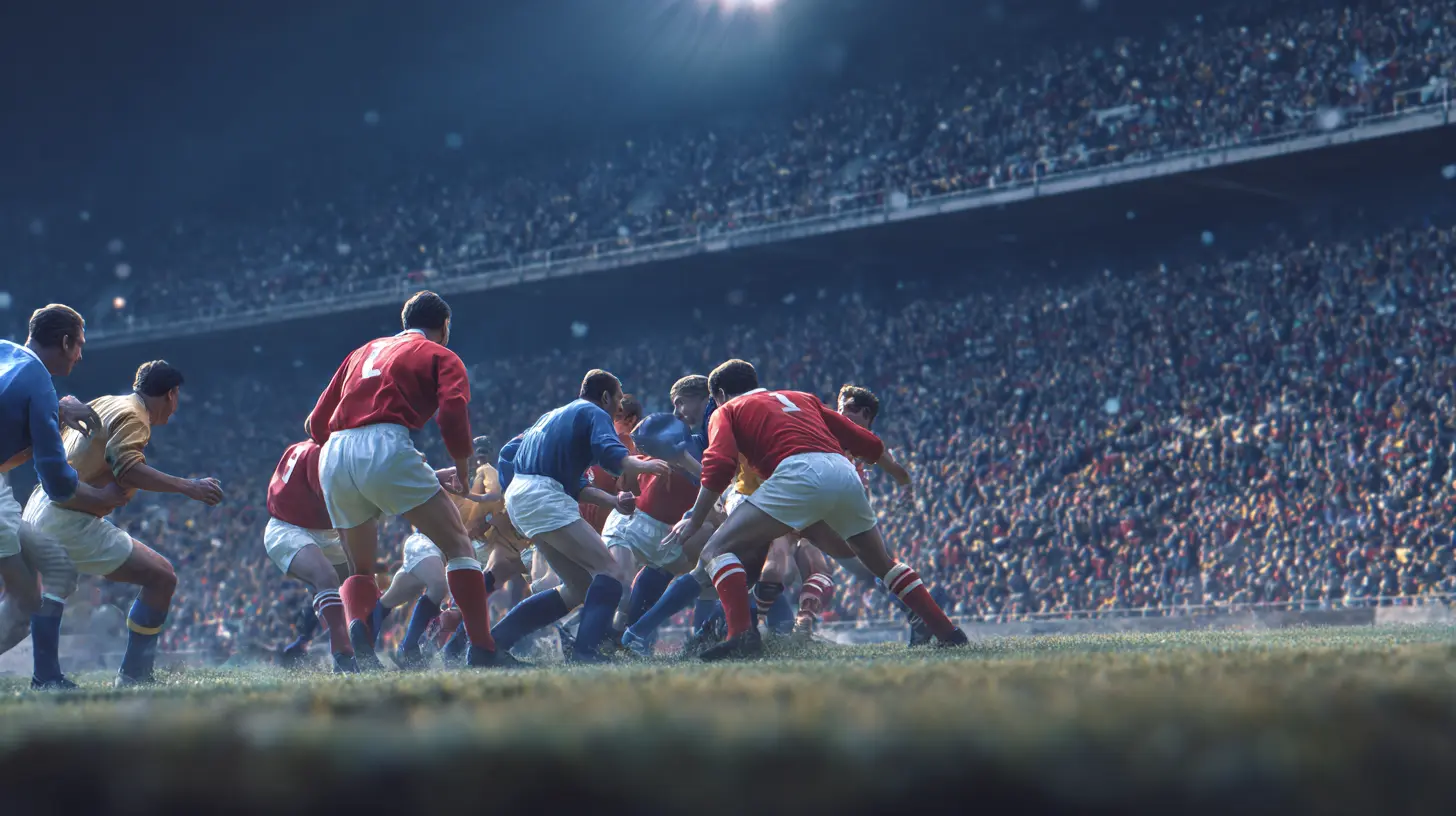
The Immediate Aftermath: Shockwaves and Denial
The reaction was a fascinating study in football’s psychology. The initial response from the old guard was denial. "A bad day at the office." "Germany were arrogant." "The heat got to them." Pundits scrambled to explain it away as an anomaly, a once-in-a-lifetime alignment of the stars.But inside the football industry, a panic button had been smashed. Scouts, directors, and managers of the world’s biggest clubs weren’t just watching the highlights; they were studying the blueprint. They saw a mid-tier nation, through systemic investment in technology, data, and holistic coaching, bridge a talent gap that was supposed to be insurmountable.
What did this mean for the billion-dollar player transfer market? What did it mean for tactical dogma? If a team could be engineered to this level, was the era of the individual superstar coming to an end?
Saudi Arabia, of course, didn’t stop there. Fueled by belief, they marched on, eventually falling to France in a thrilling quarter-final. But the seed had been planted. The "Miracle in Dallas" was the proof of concept the entire football world needed.
The Forever Change: A New Footballing Landscape
So, how exactly did that one match in 2026 change football forever?1. The Death of The Talent Monopoly: The match proved that systemic, nation-wide development could compete with and beat traditional talent pipelines. Countries across Asia, Africa, and North America saw a roadmap. Investment flooded into youth academies not designed to find one gem to sell to Europe, but to build cohesive, tech-integrated teams. The global game became truly, deeply competitive.
2. The Coach as Data Scientist: The job description of a manager changed overnight. Tactical knowledge was no longer enough. The new gurus needed to be fluent in data analytics, sports science, and even computer programming. The "gut feeling" sub was replaced by the "algorithmic recommendation" sub. Mateo Ruiz became the most sought-after mind in the sport.
3. The Fan Experience, Transformed: Broadcasts changed. We now see expected threat (xT) maps, pressing intensity meters, and real-time tactical formation trackers as standard. The fan isn’t just watching a game; they’re reading the data story underneath it. We’ve all become armchair analysts, debating system efficiency as much as we debate a wonder goal.
4. The Player, Enhanced & Protected: The wearables Saudi Arabia used, once controversial, are now standard issue. Player health is monitored to a microscopic level, preventing injuries. Training is fully personalized. The athlete is optimized, not just trained. Careers are lasting longer because of it.
5. The Beautiful Game’s New Beauty: And finally, the style. That match killed the notion that defensive, reactive football was the only way for underdogs. Saudi Arabia won by being proactive, by attacking with structure, by believing they could out-think, not just out-fight, the giants. It ushered in an era of courageous, intelligent football at all levels of the game.
Looking Back From The Future
Today, we take so much of this for granted. The hyper-analytical broadcasts, the shock results in international football that aren’t really shocks anymore, the focus on holistic system-building over cheque-book collecting. It all feels normal.But it all traces back to those 90 minutes under the Texas sun in the summer of 2026. It was the moment the sport had its "iPhone" moment. We didn’t just see a better football team; we saw the future of football itself. It was the day the underdog wasn’t just given a bone—it was given the blueprint to build its own table.
Germany vs. Saudi Arabia. A Round of 32 match that, against all odds, became the most important fixture in the 21st century. It taught us that in football, as in life, the biggest revolutions don’t always come with a loud announcement. Sometimes, they just come with a first whistle, and a plan no one saw coming.
all images in this post were generated using AI tools
Category:
Historic MatchesAuthor:

Everett Davis
Discussion
rate this article
2 comments
Callisto Rocha
The 2026 match transcended the sport, showcasing unprecedented skill and strategy that captivated global audiences. This game not only redefined tactical approaches but also highlighted the power of teamwork and resilience. Its impact will resonate for generations, influencing future talent and the evolution of football itself.
April 17, 2026 at 12:16 PM
Everett Davis
Thanks for your insights! I completely agree that the 2026 match set a new standard for the sport and will inspire future players and teams.
Brigitte Marks
Can't believe how one game reshaped football! Forever grateful for the magic of that day!
April 17, 2026 at 2:53 AM
Everett Davis
Thank you! That day reminded us all why we love this game. Truly honored it resonated with you.