Why Ankle Injuries Are Up Across All Sports in 2026
21 September 2026
Ankle injuries have always been part of sport. Roll an ankle on a basketball court, land awkwardly after a volleyball spike, or get clipped from behind on a soccer field, and you join a long line of athletes stretching back generations. What feels different in 2026 is the volume. Trainers, physical therapists, and team physicians across very different sports keep reporting the same pattern: more ankle sprains, more high ankle injuries, more recurring instability, and more time lost. The question is why. Ankles did not suddenly become fragile. Something about how athletes train, compete, recover, and even live has shifted, and those shifts have converged on the joint that carries the most load per square inch in almost every running and jumping sport.
This article digs into the forces behind the trend, separates genuine causes from convenient narratives, and offers practical guidance for athletes, coaches, and parents who want to reduce risk without wrapping every player in cotton wool.

The Ankle Is Built for a Compromise
To understand why injuries are rising, you have to appreciate what the ankle actually is. It is a hinge that also needs to tilt, rotate, and absorb force. The talus bone sits between the tibia and fibula like a rounded peg in a socket, and the stability comes mostly from ligaments rather than deep bony congruence. The lateral ligament complex, especially the anterior talofibular ligament, is the most commonly injured structure in sport.That design gives us push-off power and the ability to adapt to uneven ground. It also means the ankle tolerates very little error when force arrives from an unexpected direction. A single misstep can stretch or tear tissue in milliseconds. The joint is strong in the directions we train and vulnerable in the directions we ignore.
So the real question is not why ankles fail. It is why they are failing more often now.

More Sport, More Months, More Minutes
The simplest explanation is exposure. Athletes in 2026 tend to play more months of the year than their counterparts did a generation ago. Youth soccer, basketball, and volleyball have largely abandoned true off-seasons in many regions. Travel teams, showcase circuits, and year-round club schedules stack games on top of practices.Every additional hour on court or field adds risk. This is not a controversial claim. Injury rates per hour of play may be relatively stable in some sports, but total hours have climbed, so total injuries climb with them. When a high school athlete plays club volleyball from November to June and then joins a summer league, the ankle never gets a genuine period of unloading and rebuilding.
There is a second-order effect too. Fatigue changes landing mechanics. Tired athletes land with stiffer knees, less hip control, and more inward collapse at the ankle. That collapse, sometimes called dynamic valgus at the knee and pronation at the foot, loads the lateral ligaments. The last ten minutes of a game are not the same as the first ten, and the schedule now produces far more of those late-game minutes across a season.
The Playing Surfaces Have Changed
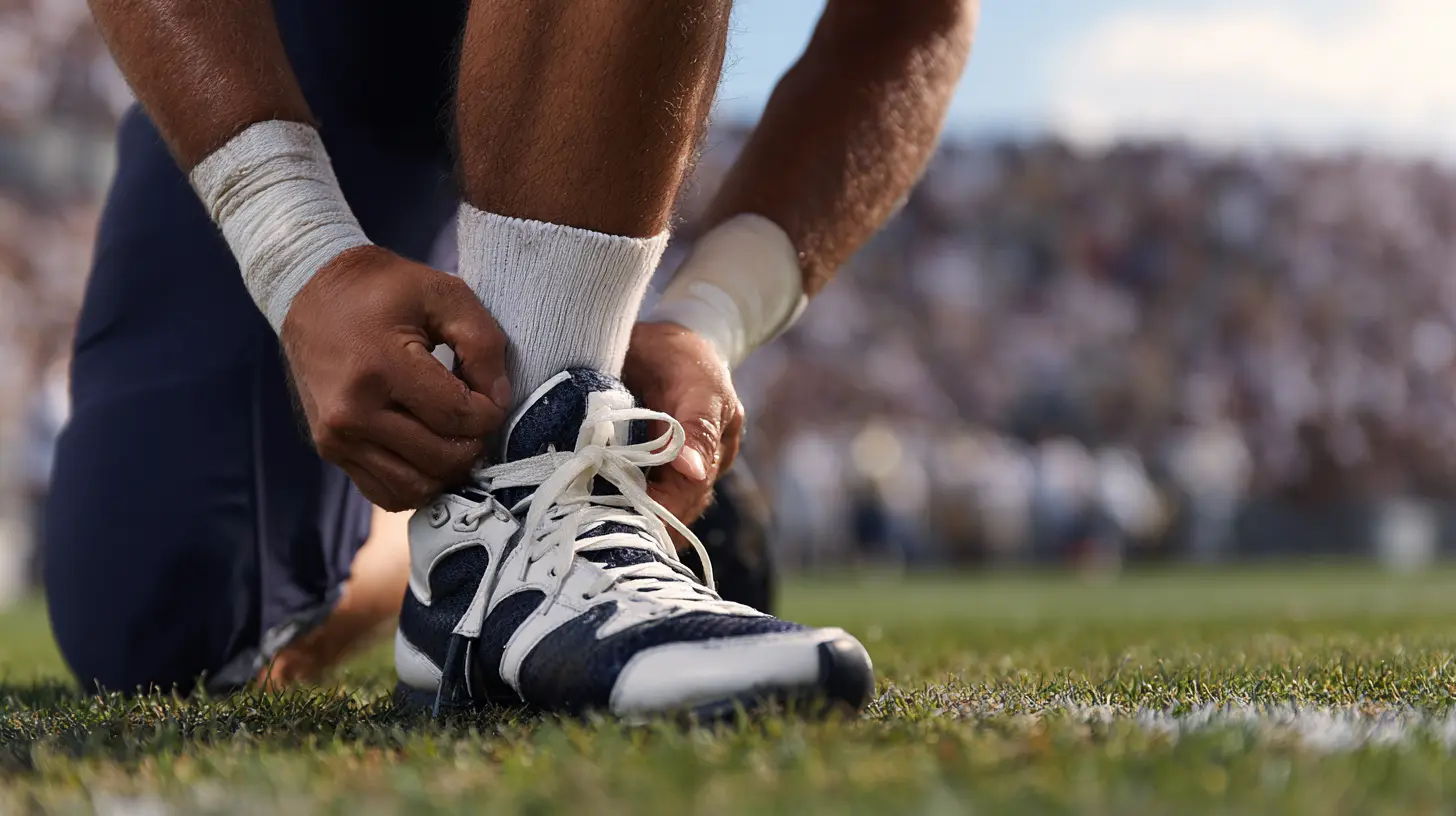
Surface is an underrated variable. Modern synthetic turf and modular court systems offer consistency, but consistency is not the same as safety. Many synthetic surfaces have higher friction than natural grass. Higher friction means a shoe grips harder, so when the foot does rotate, the torque transfers up into the ankle instead of letting the foot slide.Natural grass, for all its unevenness, can allow a small amount of give. That give sometimes prevents a ligament from reaching its failure point. On a high-grip surface, there is no release valve.
This is not an argument for tearing out every turf field. Synthetic surfaces reduce weather cancellations, lower maintenance costs, and allow far more play. The trade-off is that footwear and movement patterns need to adapt. Studs that are perfect for wet grass can be dangerous on dry synthetic turf because they lock the foot in place. Coaches who never think about cleat selection are leaving an easy risk factor unmanaged.
Footwear Got Lighter and More Aggressive
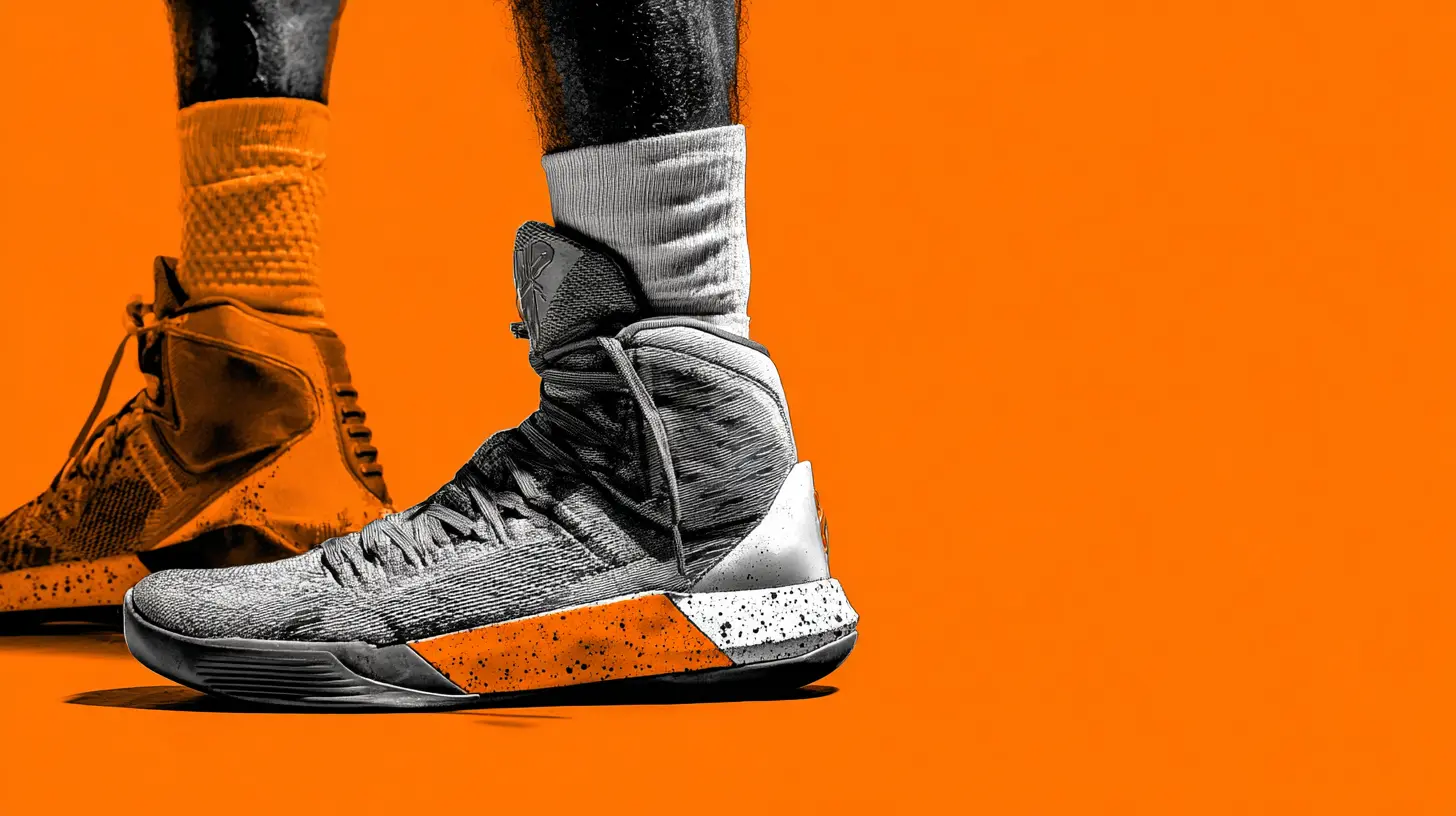
Shoe design has drifted toward lighter, faster, more responsive. That is great for sprinting and jumping. It is less great for stability. Modern basketball shoes and soccer cleats often sit lower to the ground and use thinner, more compliant foam. Some athletes love the court feel. The cost is reduced lateral support and less cushioning at the moment of landing.There is a real trade-off here, and it deserves honesty. A stiffer, higher-cut shoe can reduce some lateral ankle sprains, but it may also restrict natural motion, alter proprioceptive feedback, and shift stress to the knee or hip. Many studies over the years have struggled to show that high-top shoes prevent ankle injuries on their own. What seems to matter more is fit, the match between shoe and surface, and whether the athlete has trained the ankle to handle load.
The mistake is treating footwear as a magic shield. It is one variable among many, and an aggressive lightweight shoe paired with an untrained ankle is a poor combination.
Early Specialization Is Producing Narrower Athletes
When a child plays only one sport from age eight, they repeat the same movement patterns thousands of times. The ankle adapts to those specific demands and neglects others. A basketball player who never plays soccer may never develop the lateral cutting resilience that comes from changing direction on grass. A soccer player who never plays basketball may lack the landing mechanics that come from jumping and absorbing force.Variety builds a broader physical vocabulary. When that variety disappears, the ankle becomes specialized and brittle in the directions it does not use. This is one of the more plausible explanations for rising injury rates in youth sport, and it aligns with what many clinicians observe: the athletes who get hurt most are often the ones who have done the same thing year after year since childhood.
Return to Play Is Faster, and That May Be the Problem
Sports medicine has gotten better at diagnosing and treating ankle injuries. Surgery is more precise. Rehabilitation protocols are more structured. Athletes return to play faster than they did twenty years ago. That sounds like progress, and often it is.But faster return has a hidden cost. An ankle that is pain-free is not necessarily an ankle that is ready. Ligament healing takes time, and proprioceptive retraining takes even longer. If an athlete returns before the joint has relearned how to sense position and react to perturbation, the risk of re-injury climbs sharply. Re-injury is not a minor event. It often produces chronic instability, which then raises the risk of arthritis later in life.
The rise in ankle injuries may partly reflect a rise in re-injuries, driven by aggressive timelines and pressure to get star players back on the field.
The Screening Gap
Many teams screen for concussion, cardiac risk, and knee stability. Far fewer screen the ankle in any meaningful way. A simple battery of tests, including single-leg balance, hop tests, and a history of previous sprains, can identify athletes at elevated risk. When those athletes are missed, they enter the season with a known vulnerability that nobody addresses.The ankle is often treated as an afterthought because it is not glamorous. A torn ACL ends a season and makes headlines. A sprained ankle is expected to heal in a week or two. That attitude ignores the evidence that a significant share of ankle sprains lead to lasting problems, and that a prior sprain is one of the strongest predictors of a future one.
What Actually Reduces Risk
The good news is that ankle injury prevention is not mysterious. The evidence supports a handful of interventions, and the challenge is implementation rather than discovery.Neuromuscular Training
Balance and proprioceptive training, often using wobble boards, foam pads, or single-leg holds, improves the ankle's ability to sense and correct position. This works because the ligaments provide mechanical stability, but the muscles and nervous system provide reactive stability. Training that system reduces the likelihood that a sudden roll becomes a full tear.The best programs are progressive. Start with static balance, add reaching and perturbation, then move to sport-specific cutting and landing drills. Ten to fifteen minutes, several times a week, is enough for most athletes.
Strength Through Full Range
Calf strength matters more than most people realize. The soleus and gastrocnemius control forward motion of the shin over the foot. When they are weak, the ankle absorbs force in positions it does not tolerate well. Heavy calf raises, seated and standing, build the tissue capacity that protects the joint.Foot intrinsic strength also deserves attention. Small muscles in the foot help manage the arch and control pronation. Barefoot work on safe surfaces, toe spreads, and short-foot drills can help, though they should be introduced gradually.
Landing Mechanics
Teaching athletes to land softly, with knees tracking over toes and hips absorbing force, reduces the load that reaches the ankle. This is coachable. Video feedback, cueing, and repeated practice all help. The goal is not to eliminate ankle motion but to distribute force across the whole chain.Bracing and Taping, Used Wisely
For athletes with a history of sprains, a lace-up brace or taping during high-risk activity can reduce recurrence. The evidence is strongest for those with prior injury. For athletes with no history, routine bracing is more debatable. It may provide modest protection, but it can also create dependence and mask underlying deficits if used instead of training.The sensible approach is to brace the vulnerable ankle during competition and wean reliance over time as strength and control improve. Taping has the advantage of being adjustable, but it loosens during play and requires skilled application.
Load Management
No prevention program survives a schedule that never allows recovery. Tracking minutes, avoiding back-to-back high-intensity days, and building genuine off-season periods are unglamorous but powerful. The ankle, like any tissue, adapts during recovery, not during the stress itself.Common Mistakes and Misconceptions
Several beliefs about ankle injuries deserve scrutiny.The first is that a sprain is minor. A grade one sprain may resolve quickly, but higher-grade injuries and high ankle sprains can take months and often leave residual weakness. Treating every sprain as a minor inconvenience leads to under-treatment and re-injury.
The second is that rest is enough. Rest reduces pain but does not restore strength, balance, or confidence. Without active rehabilitation, the ankle returns to sport with the same deficits that caused the injury.
The third is that ankles are just inherently weak and nothing can be done. This is defeatist and wrong. Well-designed training reduces injury rates meaningfully in multiple sports.
The fourth is that only high-level athletes need prevention. Recreational athletes and youth players often have the least structured preparation and the highest relative risk.
A Practical Plan for Coaches and Athletes
If you want to act on this, start with a simple audit. How many hours per week does the athlete play? How many months per year? What is the surface? What shoe is being worn, and does it match the surface? Has the athlete had a previous ankle injury? Does anyone test balance and strength?From there, build a plan with four pillars: progressive strength, balance and proprioception, landing and cutting mechanics, and load management. Add bracing for those with prior injury. Reassess every few weeks.
Parents should ask coaches what prevention work is built into practice. Athletes should treat ankle training as seriously as they treat skill work. Coaches should stop treating ankle sprains as a rite of passage.
The Bigger Picture
The rise in ankle injuries across sports in 2026 is not the result of one villain. It is the product of more play, harder surfaces, lighter shoes, earlier specialization, faster return to play, and a persistent cultural habit of underestimating the joint. Each factor is manageable on its own. Together they create a system that produces more injuries than it should.The encouraging part is that the solutions are known and inexpensive. They require attention, consistency, and a willingness to treat the ankle as a performance asset rather than an afterthought. Teams that do this will lose fewer players, win more games, and send healthier athletes into their adult lives. Teams that do not will keep wondering why the same injury keeps happening to the same players, season after season.
all images in this post were generated using AI tools
Category:
Injury UpdatesAuthor:

Everett Davis