Why Return Timelines Are Still Unpredictable in 2026
21 October 2026
Injury return timelines remain one of the most misunderstood parts of professional sports. A club announces that a player will be out for "six to eight weeks," and the public treats that number like a fixture on the calendar. It is not. By 2026, sports medicine has better imaging, better surgical techniques, better load monitoring, and more data than at any point in history. Yet the gap between the announced timeline and the actual return date has not closed in any meaningful way. In some cases, the gap has widened, because better diagnostics reveal complexity that previous generations never saw.
This is not a failure of medicine. It is a structural feature of biology, human behavior, and the economics of professional sport. Understanding why timelines stay unpredictable is useful for fans, journalists, fantasy players, coaches, and anyone who has to make decisions based on a projected return date. The goal here is not to list injuries or repeat what clubs publish. It is to explain the mechanics behind the uncertainty and how to interpret timelines with a more realistic lens.

The Timeline Is a Communication Tool, Not a Medical Prediction
The first thing to understand is that a public return timeline serves several purposes, and accurate forecasting is only one of them. When a team announces a recovery window, it is managing expectations, protecting the player from pressure, satisfying league and media obligations, and preserving competitive advantage. Opponents do not need to know whether a star midfielder will be available for a specific fixture. A vague range serves everyone except the betting public and the fantasy community.Medical staff often provide a range to the club, and the club decides how to present it. That range is typically built from population-level data: what happened to similar injuries in similar athletes. It is not a prediction about this specific player. A 28-year-old with a grade II hamstring strain and a 34-year-old with the same diagnosis can have wildly different recovery trajectories based on prior injury history, muscle architecture, playing style, and even sleep quality.
This distinction matters because fans and analysts routinely treat the published number as a precise forecast. When a player misses the upper bound of the range, the narrative becomes "setback" or "mismanagement." Often it is neither. The original range was simply a statistical band, and the player landed outside it.
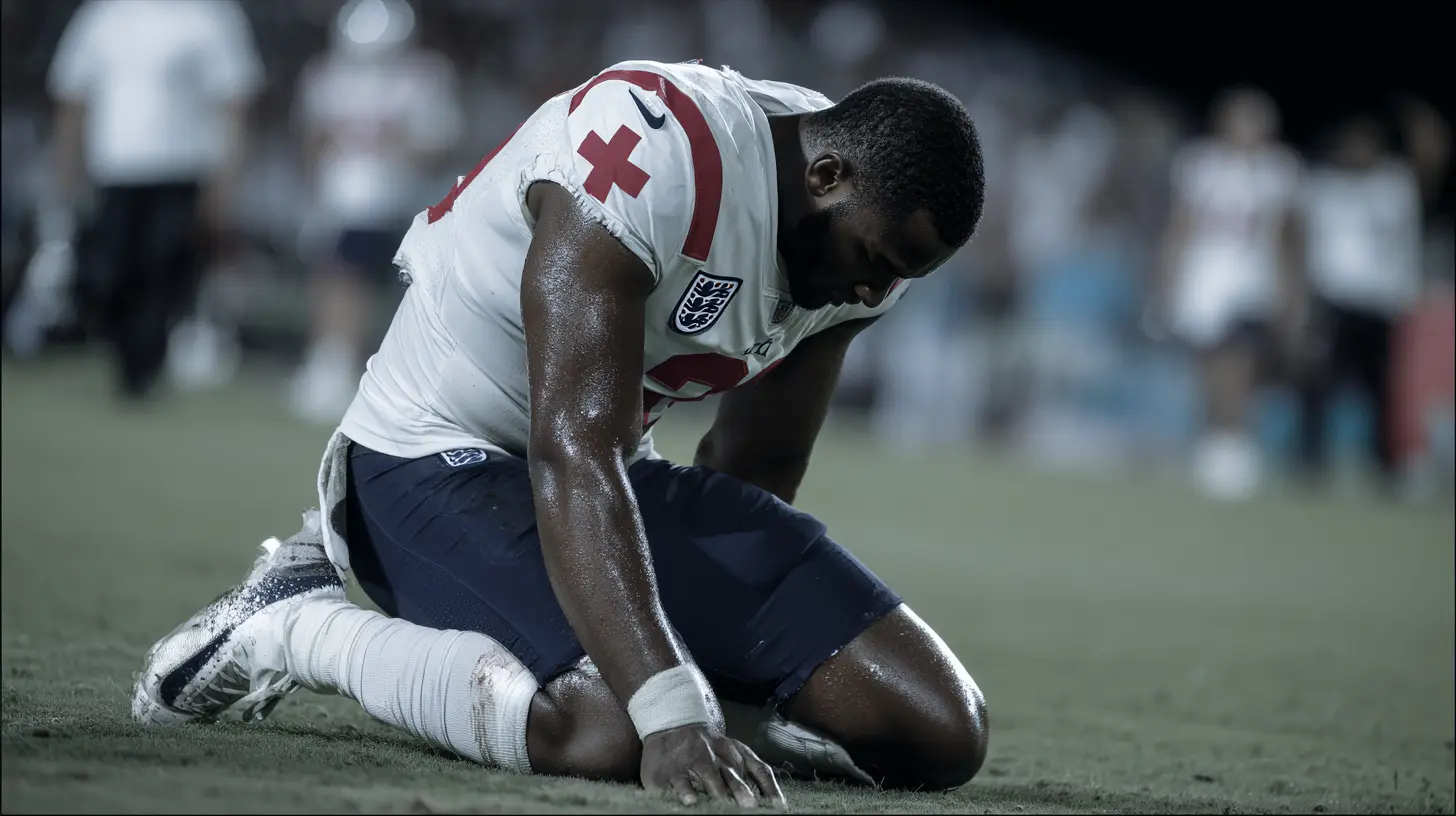
Why Biology Resists Scheduling
Healing Is Not Linear
Tissue repair follows a rough sequence: inflammation, proliferation, remodeling. But the pace of each phase varies enormously between individuals and even between injuries in the same person. A bone stress injury in a metatarsal may heal in six weeks for one athlete and twelve for another with identical imaging at diagnosis. Collagen synthesis rates, local blood supply, nutritional status, and genetic factors all influence the outcome, and none of them can be measured precisely enough at the time of injury to produce a reliable date.Scar tissue formation adds another layer. A healed ligament may be structurally intact on MRI but functionally inferior, with altered stiffness and proprioceptive feedback. The player feels ready before the tissue is ready, or the tissue is ready before the player trusts it. Neither state appears on a scan.
The Difference Between Healing and Returning
Healing is a biological process. Returning is a performance problem. A player can be medically cleared and still be months away from competitive readiness. Match intensity involves sprinting, deceleration, cutting, contact, and cognitive load that no rehabilitation drill fully replicates. The final step of return to play is often the longest and least predictable, because it depends on how the athlete responds to progressively higher loads in real training environments.This is why clubs increasingly separate "return to training" from "return to play." The first is a medical milestone. The second is a coaching and performance decision. Public timelines usually blur the two, which creates confusion when a player is "back in training" for weeks without appearing in a match.

The Load Management Variable
Tissue Tolerance Is Individual
Modern sports science frames injury risk through the lens of tissue tolerance versus applied load. A player returns when the load imposed by training and matches stays below what the healing tissue can tolerate. The problem is that both sides of that equation are dynamic. Tissue tolerance improves with progressive loading but can regress with setbacks, illness, or poor sleep. Applied load changes with the fixture calendar, the tactical demands of upcoming opponents, and the player's own movement patterns as they compensate for weakness elsewhere.A defender returning from an ankle injury may unconsciously favor the opposite leg, increasing stress on the knee or hip. This compensation can produce a secondary issue that resets the timeline entirely. Practitioners see this constantly, and it is one of the main reasons return dates slip.
The Re-Injury Shadow
The highest risk period for many injuries is not the initial healing phase but the weeks immediately after return. Research across multiple sports has consistently shown elevated re-injury rates in the early return window. Clubs know this, which is why they often delay the final clearance beyond what the player feels is necessary. A player who says "I am ready" is reporting a subjective state. The medical team is weighing that against objective markers, historical base rates, and the cost of a second injury.This creates a tension that shapes timelines. The player wants to play. The coach wants the player available. The medical staff wants to protect the athlete and, frankly, their own professional record. The published timeline is often a compromise between these pressures, which means it reflects organizational dynamics as much as clinical reality.
Diagnostics Have Improved, but So Has the Ability to Detect Complexity
Imaging in 2026 is remarkable. MRI resolution, ultrasound elastography, and biomarker panels can reveal details that would have been invisible twenty years ago. This is genuinely useful, but it has an unintended effect on timelines: it surfaces problems that previously went undiagnosed.A player with persistent knee pain might now be found to have subtle cartilage changes or bone marrow edema that complicate the prognosis. In the past, the same player might have been diagnosed with "knee soreness" and returned on a loose schedule. Today the diagnosis is more precise, the perceived severity is higher, and the timeline is longer, even though the underlying biology has not changed.
Better detection also means more conservative decision-making. When you can see a small defect, you are more likely to wait. This is generally good for athlete welfare, but it makes public timelines harder to predict because the decision thresholds are shifting.
The Role of Sport-Specific Demands
Return timelines are not transferable across sports, and they are not even transferable across positions within a sport. A goalkeeper returning from a shoulder injury faces different demands than a center back with the same diagnosis. A sprinter's hamstring recovery is not comparable to a distance runner's, because the mechanical demands differ.Consider a few practical contrasts:
- A lineman in American football returning from a knee injury must absorb and deliver force in crowded, chaotic contact situations. The tolerance threshold is high, and the margin for error is small.
- A tennis player returning from a wrist injury must generate repetitive, high-velocity loads through a small joint. The tissue may handle a single maximal effort but fail under cumulative volume.
- A basketball player returning from an ankle sprain must decelerate and change direction repeatedly. Proprioceptive deficits that are invisible in a straight-line running test become decisive in a closeout or a cut.
Because of these differences, a club's timeline for one player tells you very little about another player with a superficially similar injury. Analysts who compare cases across sports are usually making an error.
Why the "Setback" Narrative Is Often Wrong
Media coverage tends to frame any delay as a setback. Sometimes it is. But there are at least four other explanations that are more common:1. The original timeline was a best-case scenario presented as a range, and the player is tracking normally within the realistic distribution.
2. The player reached a rehabilitation milestone later than expected but is now progressing at a normal rate.
3. The club chose to extend the timeline proactively after reviewing load data, without any new injury.
4. The player is medically ready but not selected, and the club has not updated the public timeline because there is no obligation to do so.
Distinguishing these cases requires information the public rarely has. The practical takeaway is to treat "setback" reports with skepticism unless they come with specific clinical detail, which they usually do not.
What Actually Drives the Final Decision
The return-to-play decision is made by people, not by a formula. In most professional environments it involves the team physician, physiotherapists, strength and conditioning staff, the head coach, and sometimes the player's agent and family. Each party weighs different risks.The physician prioritizes long-term joint health and avoids catastrophic outcomes. The physiotherapist focuses on functional benchmarks and movement quality. The strength coach tracks force production and asymmetry. The coach thinks about the next fixture and squad depth. The player thinks about career, contract, and pride.
When these priorities align, returns happen smoothly. When they conflict, timelines stretch. A coach pushing for an early return can accelerate the process, but only up to the point where the medical staff is willing to sign off. A player pushing too hard can create a setback that delays everything. There is no single decision-maker, which is why outcomes are hard to forecast from the outside.
Practical Advice for Interpreting Timelines
For Fans and Fantasy Players
Treat any published timeline as a median with a wide distribution. Build in a buffer of roughly 20 to 40 percent beyond the upper bound for planning purposes, especially for soft tissue injuries and joint sprains. For surgically repaired structures, the buffer should be larger. Do not assume a player will return the moment they resume training. Watch for reports of full team training, contact training, and reserve-team minutes as more meaningful signals than the original announcement.For Journalists and Analysts
Ask what the timeline is based on. Is it a population average, a club estimate, or a surgeon's projection? These are different things. Avoid equating "return to training" with "return to play." When a player misses the projected window, resist the setback narrative unless there is clinical evidence. Instead, note that the original range was a statistical estimate and the player is within a normal distribution.For Coaches and Practitioners
Communicate in ranges, not dates. Explain to players and staff that the range reflects biological variability, not a lack of knowledge. Use functional criteria rather than calendar criteria for progression. Document the decision rationale so that when a timeline slips, the organization understands why. Build in scheduled reassessments rather than a single target date, because a target date creates pressure to hit it regardless of the evidence.For Players
Understand that the published timeline is not a promise to you or about you. It is a communication artifact. Focus on the functional benchmarks your staff sets, and be honest about symptoms. Hiding discomfort to accelerate a return is one of the most reliable ways to extend the overall absence.Common Mistakes and Misconceptions
Several recurring errors distort how people think about return timelines.The first is the belief that a timeline is a prediction. It is a range derived from past cases, and individual outcomes vary widely.
The second is the assumption that a player who is not playing must be injured. Sometimes the player is healthy but not selected, or is being managed carefully through a congested fixture list.
The third is comparing athletes across sports or positions. The demands differ too much for the comparison to be useful.
The fourth is treating imaging results as definitive. A scan shows structure, not function. A player can have a clean scan and still be unable to perform, or an imperfect scan and be fully functional.
The fifth is underestimating the psychological dimension. Fear of re-injury, loss of confidence, and the pressure of expectation all affect performance after clearance. Some players return physically ready but take weeks to trust their body in competitive situations.
What Would Make Timelines More Predictable
If the goal is genuinely better forecasting, a few things would help, though none would eliminate uncertainty.Standardized reporting would allow comparison across clubs and sports. If teams published functional milestone data alongside timelines, analysts could see where a player actually is rather than guessing. Some leagues have moved in this direction, but adoption is uneven.
Better individual biomarkers would help. If a simple blood test could reliably indicate tissue healing status, timelines would tighten considerably. Research is ongoing, but nothing available in 2026 provides that level of certainty.
More honest public communication would also help. Clubs could present timelines as distributions rather than ranges, and explain that the upper bound is not a deadline. This would reduce the perception of setbacks when players land at the later end of the curve.
None of these changes would make biology predictable. They would simply make the uncertainty more visible, which is a different and more achievable goal.
The Bottom Line
Return timelines in 2026 remain unpredictable because they are estimates about biological processes in individuals, filtered through organizational priorities and public communication strategies. Better medicine has not solved this, and it probably never will, because healing is a dynamic process that responds to load, environment, and human behavior in ways no scan can fully capture.The practical response is not to demand more precise dates. It is to interpret the dates we get with appropriate humility. Treat timelines as ranges, watch functional milestones rather than calendar markers, and expect the final return to play to be the least predictable part of the process. That approach will not give you certainty, but it will keep you closer to reality than the published number ever will.
all images in this post were generated using AI tools
Category:
Injury UpdatesAuthor:

Everett Davis

