ACL Recovery Times Are Shrinking in Pro Sports by 2027
14 October 2026
Anterior cruciate ligament injuries once carried a near-automatic sentence: nine to twelve months on the sideline, sometimes more, with a real chance the athlete never returns to the same level. That timeline is collapsing. Not because surgeons have found a magic fix, but because the entire pipeline around the injury has changed. Diagnostics, surgical technique, graft selection, rehabilitation loading, return-to-play criteria, and data feedback loops have all improved at the same time. By 2027, the standard return window for many professional athletes will likely sit closer to six to eight months for some sports and positions, while remaining longer for others where the risk calculus is different.
This is not a prediction that everyone comes back faster. It is a prediction that the floor of what is considered acceptable recovery will drop, and that teams will get better at identifying which athletes can safely push that floor. The gap between the fastest and slowest recoveries will widen, not shrink. Understanding why requires looking at each stage of the process and asking what actually changed.
Why the Old Nine-to-Twelve-Month Timeline Existed
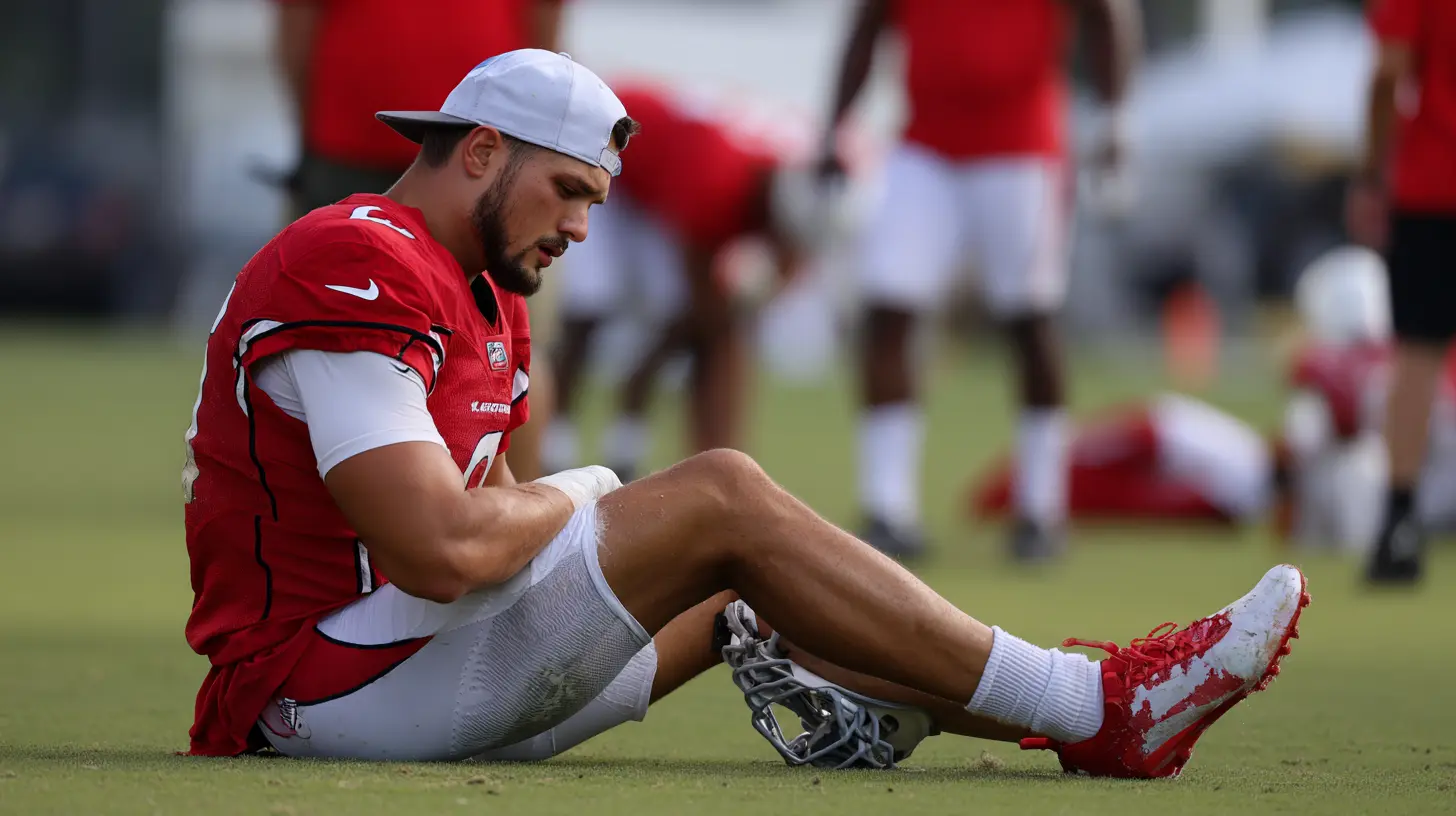
The traditional timeline was not arbitrary. It reflected a few hard biological realities.First, the graft used to reconstruct the ACL has to go through a process called ligamentization. The transplanted tissue starts as a tendon graft, loses its blood supply, gets revascularized, and gradually remodels into something that behaves more like a ligament. Early in that process, the graft is actually weaker than the native ACL it replaced. In animal models, graft strength dips significantly in the first weeks and only climbs back toward normal over many months. That biology does not care about the athlete's contract or the playoff race.
Second, the old rehab model was conservative by design. Surgeons worried that aggressive loading would stretch or rupture the graft. So patients spent weeks in a brace, months avoiding certain movements, and only started running and cutting late in the process. That approach protected the graft but also left the surrounding muscles, tendons, and neuromuscular control patterns in poor shape. The athlete returned with a knee that was structurally intact but functionally compromised, which raised reinjury risk.
Third, return-to-play decisions were often driven by time rather than by objective criteria. If the calendar said nine months, the athlete played. If it said six, they did not, even if their strength and movement quality looked excellent. The timeline was a proxy for readiness, not a measurement of it.
All three of those pillars are now under pressure.
What Changed: The Four Levers
The acceleration in recovery times comes from four distinct areas. Each one contributes a piece, and the effect compounds when they work together.1. Surgical Technique and Graft Choice
Not all ACL reconstructions are equivalent. The position of the tunnels drilled into the femur and tibia, the type of graft used, and whether the surgery addresses associated injuries all influence how quickly an athlete can progress.Anatomic reconstruction, which places the graft closer to the native ligament's footprint, has become more common. The rationale is mechanical: a graft placed in a more anatomical position restores more normal knee kinematics, which reduces abnormal stress on the graft during movement. Less abnormal stress means the rehab team can load the knee earlier without the same fear of failure.
Graft choice matters too. Bone-patellar tendon-bone grafts tend to incorporate faster at the bone plugs but can cause anterior knee pain that slows early rehab. Hamstring grafts avoid that pain but may have slower incorporation and can weaken hamstring function, which matters for sprinting and deceleration. Quadriceps tendon grafts have gained popularity because they offer a good balance of strength and relatively predictable healing. Some surgeons now use internal bracing, a thin synthetic tape that runs alongside the graft and shares load during the early healing phase. This is not a replacement for the graft. It is a safety net that may allow more aggressive early rehab.
The key point: the surgeon's choices shape the rehab ceiling. An athlete with an anatomically placed, internally braced quad graft may have a higher early ceiling than someone with a non-anatomical hamstring reconstruction. That is not a value judgment about surgeons. It is a recognition that the starting conditions differ.
2. Blood Flow Restriction and Early Loading
For decades, the standard advice after ACL surgery was to protect the graft by avoiding heavy loading. The problem is that this also deconditions the muscle. Quadriceps strength loss after ACL reconstruction can be dramatic, and it is one of the strongest predictors of whether an athlete returns to sport and whether they reinjure.Blood flow restriction training changed that equation. By applying a cuff to the limb and restricting venous return while allowing arterial flow, athletes can achieve muscle hypertrophy and strength gains with very light loads. This lets the rehab team load the quadriceps early without putting heavy stress through the graft. The mechanism is not fully understood, but it appears to involve metabolic stress, cell swelling, and fiber recruitment patterns that mimic heavier training.
The practical result: athletes who use BFR in the first weeks and months after surgery often preserve more muscle mass and strength than those who wait. When they reach the later stages of rehab, they are starting from a higher baseline, which shortens the time needed to meet return-to-play criteria.
BFR is not appropriate for everyone. It requires proper equipment, trained supervision, and screening for conditions like clotting disorders or severe cardiovascular disease. It is also not a substitute for heavy loading later in rehab. It is a bridge.
3. Criteria-Based Return to Play
The biggest shift in the last decade is the move away from time-based clearance toward criteria-based clearance. Instead of asking "is it nine months yet," teams ask "does this athlete meet these specific benchmarks."Common criteria include:
- Quadriceps strength within 90 percent of the uninjured side, measured with dynamometry
- Hamstring strength within 90 percent
- Limb symmetry index above 90 percent on hop tests
- Normalized landing mechanics on video analysis
- Psychological readiness on validated questionnaires
- Sport-specific movement quality under fatigue
The advantage of criteria-based clearance is obvious: it individualizes the timeline. A genetically gifted healer with excellent movement quality might clear in six months. A slower healer with poor landing mechanics might need twelve. Both get the right decision for their body.
The disadvantage is that criteria can be gamed or misinterpreted. A 90 percent strength threshold sounds objective, but it depends on how strength is measured, how many repetitions are used, and whether the test is performed when the athlete is fresh or fatigued. Two practitioners can look at the same athlete and reach different conclusions. This is why elite programs use multiple tests and a team approach rather than a single number.
4. Data and Monitoring
Wearable sensors, force plates, and video analysis have made it possible to track an athlete's movement quality in ways that were not feasible ten years ago. A force plate can measure how asymmetrically an athlete lands from a jump. A wearable can track how much they decelerate during a session. A video system can flag knee valgus, a collapse of the knee inward, during cutting.This data does not heal the ligament. It helps the rehab team make better decisions about when to progress and when to hold back. If an athlete's landing symmetry is improving week over week, the team can justify adding load. If it plateaus or regresses, they can pull back before a problem develops.
The risk is over-reliance on numbers. An athlete can look symmetrical on a force plate and still feel unstable. A video can miss subtle compensations. Data is a tool, not a verdict.
Why 2027 Is the Inflection Point
The trends described above are already in motion. So why point to 2027 specifically?Because the compounding effects are reaching a threshold. A single improvement, like better graft placement, might shave a few weeks off recovery. But when you combine anatomical reconstruction, internal bracing, early BFR, criteria-based clearance, and continuous monitoring, the effects multiply. Teams that adopt all of these practices are already seeing athletes return in seven to eight months in sports where nine to twelve was once the norm.
By 2027, these practices will likely be standard in most professional leagues, not just the most innovative teams. The spread of knowledge through sports medicine networks, the falling cost of monitoring technology, and the competitive pressure to get players back faster will push adoption. The result will be a new normal.
But the new normal will not be uniform. Sports with high cutting and pivoting demands, like soccer, basketball, and handball, will still see longer timelines than sports with more linear movement, like sprinting or cycling. Position matters too. A goalkeeper who mostly moves side to side may return faster than a winger who sprints and cuts at full speed. A lineman in American football may return faster than a running back.

The Trade-Offs Nobody Talks About
Faster return is not automatically better. There are real trade-offs, and pretending otherwise does a disservice to athletes and teams.Reinjury Risk
The most obvious concern is that returning too soon increases the risk of a second ACL injury. The research on this is nuanced. Some studies suggest that early return, particularly before nine months, is associated with higher reinjury rates. Other studies suggest that the risk is driven more by whether the athlete meets strength and movement criteria than by the calendar.The honest answer is that we do not have definitive data on what happens when athletes return at six months with excellent criteria scores. The population of athletes who meet those criteria at six months is small, and they are not a random sample. They are likely the best healers and most dedicated rehab patients. Their outcomes may not generalize.
This is why criteria-based clearance matters. It is not about returning as fast as possible. It is about returning as soon as the athlete is genuinely ready, which may be faster or slower than the average.
Psychological Readiness
An athlete can be physically cleared and still not be ready to play. Fear of reinjury is common and can lead to hesitancy, which itself increases injury risk. Some athletes need more time to trust the knee, even if the numbers say they are ready.This is where psychological readiness questionnaires and sport-specific drills help. An athlete who hesitates on a cut in practice is not ready for a game, regardless of what the force plate says. The rehab team needs to address that fear directly, sometimes with a sports psychologist, rather than just waiting for it to fade.
Long-Term Joint Health
ACL injury is associated with an increased risk of osteoarthritis later in life, regardless of how the injury is treated. Faster return does not necessarily change that risk, but it also does not eliminate it. Athletes and teams should be honest about this. The goal is not just to get back on the field. It is to have a knee that functions well for decades.What This Means for Different Stakeholders
For Athletes
If you are recovering from ACL surgery, the most important thing you can do is understand your own criteria for return. Ask your surgeon and physical therapist what specific benchmarks you need to hit. Track your progress. Do not compare your timeline to someone else's, especially someone with a different graft, different sport, or different injury.Push for early loading, but do it under supervision. BFR and early range of motion are not things to improvise at home. The risk of doing them wrong is real.
For Coaches and Teams
The temptation to rush a star player back is always there. Resist it. The data is clear that meeting criteria matters more than hitting a date. Invest in the monitoring tools and the staff to use them. A player who returns at eight months and stays healthy is more valuable than one who returns at six months and reinjures.For Parents of Young Athletes
The professional model does not translate directly to youth sports. Young athletes are still growing, their growth plates are open, and their rehab needs are different. Faster return in pro sports is driven by resources and expertise that most youth programs do not have. Do not assume your child can or should follow the same timeline.
Common Mistakes and Misconceptions
Mistake: Assuming faster is always better. Faster is better only if the athlete meets criteria. Otherwise, it is just riskier.Mistake: Ignoring the psychological side. Physical readiness and psychological readiness are different. Both matter.
Mistake: Comparing across graft types. A patellar tendon graft and a quad tendon graft have different healing profiles. Comparing timelines without accounting for that is misleading.
Misconception: The graft is fully healed at return to play. It is not. The graft continues to remodel for a year or more. Return to play means the athlete can handle sport demands, not that the knee is back to its pre-injury state.
Misconception: Surgery is the only option. Some ACL injuries, particularly partial tears, can be treated non-surgically with a structured rehab program. This is more common in athletes who do not need to cut or pivot at high speed. The decision depends on the injury, the sport, and the athlete's goals.
What to Watch Between Now and 2027
A few developments will shape how fast recovery times actually shrink.Biologics. Platelet-rich plasma, stem cells, and other biologic treatments are often marketed as ways to speed healing. The evidence is mixed. Some studies show modest benefits, others show none. Do not assume a clinic offering biologics is offering a proven solution.
Artificial intelligence in rehab. AI tools that analyze movement and predict readiness are emerging. They could make criteria-based clearance more objective and more accessible. They could also introduce new errors if the models are trained on unrepresentative data.
Rule changes. Some leagues may adjust rules to reduce ACL injury risk in the first place, such as limiting certain tackles or changing scheduling to allow more recovery time. Prevention is always better than treatment.
Long-term outcome data. As more athletes return faster, researchers will track what happens to them over five, ten, and fifteen years. That data will either validate the faster timelines or force a rethink.
The Bottom Line
ACL recovery times in pro sports are shrinking because the entire system around the injury is getting better. Surgery is more precise. Rehab is more aggressive and more targeted. Return-to-play decisions are based on criteria rather than calendars. Monitoring is more continuous.By 2027, six to eight months will be a realistic target for some athletes in some sports. For others, nine to twelve months will remain the right answer. The goal is not speed for its own sake. The goal is to get each athlete back as soon as they are genuinely ready, with the lowest possible risk of reinjury and the best possible long-term outcome.
That is a more complicated message than "recovery is faster now." But it is the honest one.
all images in this post were generated using AI tools
Category:
Injury UpdatesAuthor:

Everett Davis
Discussion
rate this article
1 comments
Colette Barron
Science wins; athletes push limits further.
October 14, 2026 at 3:08 AM