Coaches on the Hot Seat Entering the 2027 Season
4 September 2026
The 2027 season is not just another year on the calendar. It is a reckoning. Across college football and the NFL, the margin between job security and a cardboard box on the curb has never been thinner. Athletic directors are less patient, owners are more impulsive, and the media cycle chews up stability faster than ever. For the coaches listed below, the coming months are not about building for the future. They are about surviving the present.
This is not a list of bad coaches. In fact, most of these men have proven they can win. That is precisely why the pressure is so intense. The expectations have outgrown their results. When you get paid like a top-five coach, you are judged like one. And when the roster is loaded, the schedule is manageable, and the fan base is restless, there is nowhere to hide.
Let us break down the coaches who need a strong start, a signature win, or at the very least, a clear sign of progress before the leaves turn. Some will save themselves. Some will not. And a few will learn that in this business, the hot seat does not care about your excuses.
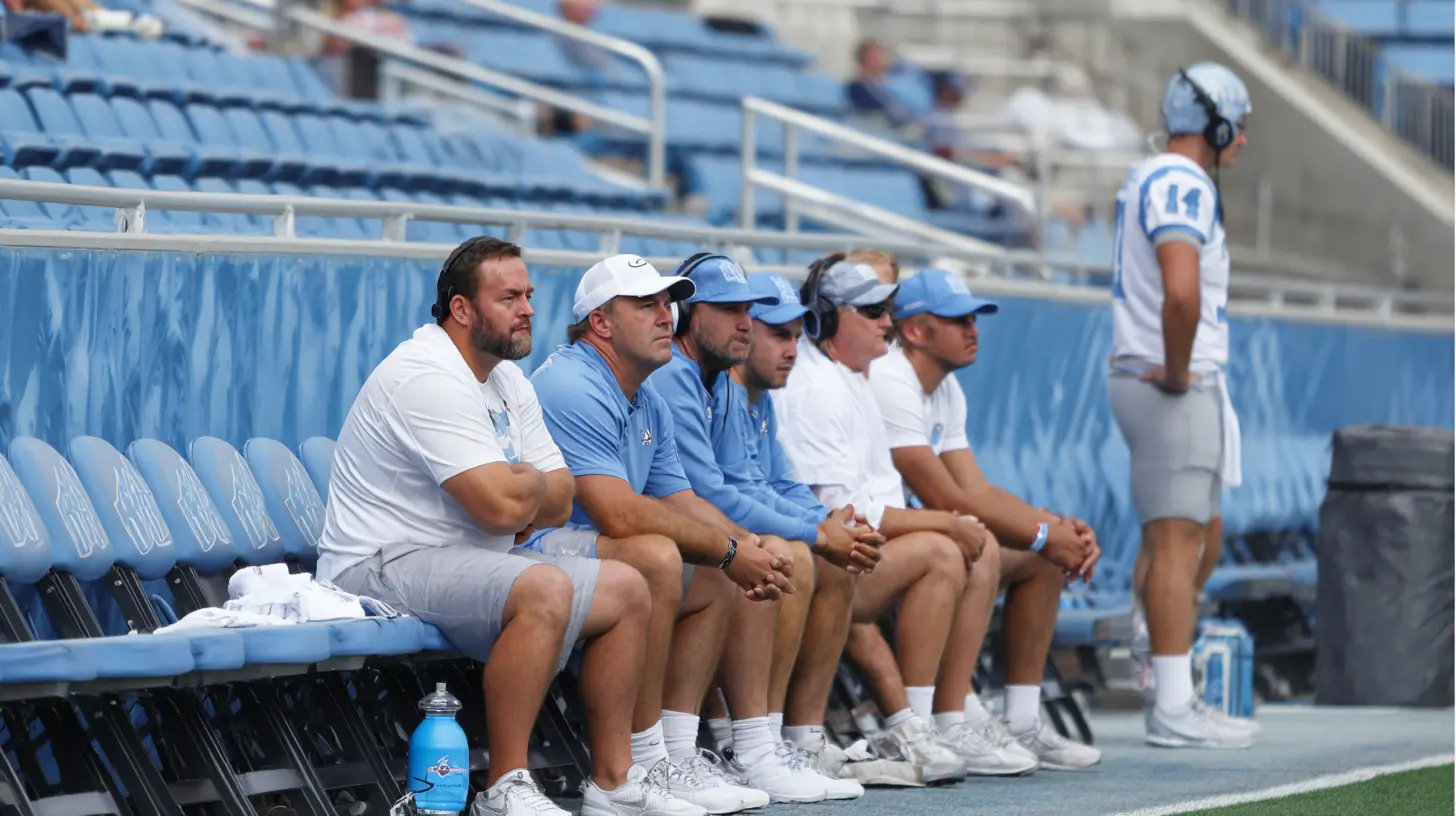
The NFL: Where the Window Closes Fast
The NFL is a results-based business with a short memory. A coach can go from genius to goner in twelve months. The 2027 season features several head coaches who have run out of runway, not because they lack talent, but because their teams have plateaued or regressed under their watch.The Veteran on the Brink
Let us start with the most obvious case: a coach with a winning record, a playoff appearance, and yet a growing sense that his message has gone stale. This is the classic third-act problem. The players still respect him, but they no longer fear him. The coordinators are eyeing other jobs. The general manager is drafting for a different scheme than the one being run.When a coach reaches this point, the numbers rarely lie. Look at the close games. Look at the fourth-quarter collapses. Look at the penalties in critical moments. Those are the signs of a team that is not fully bought in. It is not about effort. It is about belief. And once belief erodes, no amount of film study brings it back.
The best comparison here is what happened with a certain NFC coach who went to two conference championships in three years, then missed the playoffs entirely. The front office gave him one more year, and he responded by winning just enough to look average. That is the trap. Average does not save you. It just delays the inevitable.
For the coach on the hot seat in 2027, the strategy should be radical simplification. Strip the playbook down to what the players execute best. Stop trying to outsmart the opponent and start trying to out-execute them. This sounds obvious, but pride gets in the way. Coaches want to prove they are smart. The smartest move is admitting that your current approach is not working and changing it before someone changes it for you.
The First-Time Head Coach Who Lost the Locker Room
There is a specific type of pressure that comes with being a first-time head coach who was hired to fix a culture. You are brought in to be the disciplinarian, the tone-setter, the guy who stops the bleeding. But if you come in too hard, you lose the veterans. If you come in too soft, you lose the building.The 2027 season has at least one such coach who is already hearing whispers. His team quit in the second half of last season. The effort was embarrassing. The body language was worse. And when the season ended, he gave a press conference that sounded more like a eulogy than a rallying cry.
Here is the hard truth: once a locker room quits, it rarely comes back under the same leadership. Players talk. Agents talk. The culture rot spreads faster than any scheme can fix. The only way out is to make bold personnel moves. Cut the malcontents, even if they are talented. Promote the practice-squad guys who play with heart. Change the starting lineup even if it means starting over.
This is the "burn the boats" approach. It is risky. It might cost you games in September. But it is the only way to prove to the players who remain that you are serious. If you keep trying to win over the guys who already quit on you, you are just delaying your own firing.
The mistake most first-time coaches make is thinking they can reason with disgruntled stars. You cannot. The relationship is broken. The sooner you move on, the sooner the new culture takes root. The coach who figures this out by Week 4 might save his job. The one who waits until December is just collecting a paycheck.
College Football: The Transfer Portal and the Win-Now Mandate
College football has changed more in the last five years than in the previous fifty. The transfer portal, NIL money, and conference realignment have turned coaching into a year-round grind of roster management, fundraising, and public relations. The old model of building a program over four years is dead. You either win in year two or you are gone.The Blue Blood with a Losing Record
There is no hotter seat in America than the one occupied by a coach at a traditional powerhouse who has posted back-to-back losing seasons. The recruiting classes are still top-ten, but they are not top-three. The transfers are leaving instead of arriving. The donors are asking questions. And the local media is running daily polls on who should replace him.This coach is not a bad X's and O's guy. He knows football. The problem is that he is running a 2015 offense in a 2027 world. He is playing slow, conservative football against teams that are spreading the field and attacking vertically. He is winning the time of possession battle while losing the scoreboard. The analytics guys in the athletic department are pulling their hair out.
The fix is not a new coordinator. It is a philosophical overhaul. This coach needs to admit that his style of football no longer fits the roster he has. He needs to watch what the top programs are doing and adapt. That does not mean copying someone else's playbook. It means understanding the principles of modern offense: tempo, spacing, and quarterback mobility.
The trade-off here is identity versus innovation. This coach built his reputation on being tough, physical, and old-school. If he changes, he risks looking like a hypocrite. But if he does not change, he risks being fired. The smart move is to frame the change as an evolution, not a surrender. Tell the fans, "We are still going to be physical, but we are going to be physical at a faster pace." That is a message people can buy.
The common mistake is waiting too long. Coaches in this situation often think they are one or two players away. They are not. They are one or two philosophical shifts away. The roster is fine. The scheme is the problem. And the scheme is the coach's responsibility.
The Group of Five Coach Who Got the Big Job
Every year, a successful coach from a smaller program gets hired by a Power Conference school, only to discover that the rules are different. In the Group of Five, you can win with scheme and player development. In the Power Conference, you need to win the recruiting battles first. The scheme matters less when the other guy has better athletes at every position.The 2027 season features a coach in exactly this situation. He won big at his previous stop by being smarter than everyone else. Now he is facing teams with equal or better intelligence and superior talent. His offense, which looked revolutionary against lesser competition, is getting shut down by defensive coordinators who have seen it all before.
This coach is on the hot seat because his athletic director expected a smoother transition. The roster he inherited was not as bad as advertised, but it was not as good as he thought. He spent his first year installing his system, and the results were ugly. Now, in year two, the excuses are running out.
The best practice for this coach is to lean into his strengths rather than trying to be something he is not. If he is a great offensive mind, he should call the plays himself. If he is a great motivator, he should be more visible in the locker room. The mistake is trying to be a CEO coach when you got hired because you were a brilliant tactician. Delegate the admin stuff. Focus on what got you here.
The other mistake is ignoring special teams and the kicking game. In the Group of Five, you can win games with a great punter and a solid return game. In the Power Conference, field position is everything when the talent gap is small. This coach needs to treat special teams as a weapon, not an afterthought. A hidden yardage advantage of fifty yards per game can be the difference between 7-5 and 9-3.
The Unique Pressure of the 2027 Season
Why is 2027 different from any other year? Because the landscape is still settling. Conference realignment has created new rivalries and broken old ones. The playoff expansion has changed the math on what constitutes a successful season. And the transfer portal has made roster continuity a myth.The Playoff Math Has Changed
In the old days, a coach could survive a 9-3 season if the losses were close and the recruiting class was strong. Now, with a twelve-team playoff, anything less than ten wins feels like a failure at the big programs. The coaches on the hot seat are not just trying to make a bowl game. They are trying to make the playoff. And the margin for error is razor thin.This changes the in-game decision-making. Coaches are more aggressive on fourth down. They are going for two-point conversions earlier. They are throwing the ball more on early downs. The analytics movement has taken over, and the coaches who resist it are getting left behind.
The coaches who thrive in 2027 will be the ones who embrace the new math. They will understand that a 45-42 win is better than a 24-21 loss. They will not punt on fourth-and-short from midfield. They will not kick field goals on fourth-and-goal from the two-yard line. These decisions feel risky in the moment, but they are the only way to keep pace in a league where everyone else is playing the same game.
The Transfer Portal as a Lifeline and a Curse
The transfer portal is a double-edged sword for coaches on the hot seat. On one hand, it allows you to fill holes quickly. You can lose your starting quarterback and find a replacement in a week. On the other hand, it means your own players can leave just as easily. And when the rumors start swirling that you might be fired, the portal becomes a leaky ship.The best coaches use the portal strategically. They do not just take the best available player. They take players who fit their culture and their scheme. They also work hard to keep their own players happy, because the cost of replacing a starter is higher than the cost of keeping him.
The coaches who fail in the portal era are the ones who treat it like free agency in the NFL. They chase stars and ignore chemistry. They end up with a roster full of talented individuals who do not play well together. The hot seat coach needs to be the opposite. He needs to build a team, not a collection of mercenaries.
What Can Save a Coach on the Hot Seat?
There is no single formula for saving a job in 2027, but there are a few patterns that tend to work. The coaches who survive are the ones who make bold changes early, communicate clearly with their players and their bosses, and get a little bit lucky.The Early-Season Statement Win
Nothing cools a hot seat faster than a signature victory in September. Beat a top-ten opponent on the road. Win a rivalry game in dramatic fashion. Shut out a team that was supposed to score forty points. These results create momentum, and momentum creates patience.The key is to schedule for success. If you have control over your non-conference schedule, do not schedule a murderer's row. You need wins, not moral victories. Save the tough games for conference play, where they matter more anyway. This is not cowardice. It is smart management of your own future.
The Public Vote of Confidence
When an athletic director or owner publicly backs a coach, it is often the kiss of death. But there is a difference between a forced vote of confidence and a genuine show of support. The coaches who survive are the ones whose bosses are willing to say, "He is our guy, and we believe in what he is building." That message filters down to the players and the recruits.The coaches who fail are the ones who hear silence from the front office. Silence means they are already gone. They just do not know it yet. If you are on the hot seat, you need to have honest conversations with your boss early in the season. Ask directly, "What do I need to do to keep this job?" If the answer is vague, start updating your resume.
The Midseason Adjustment
The best coaches are not stubborn. They are adaptable. If the offense is struggling, they change the play-caller. If the defense is getting gashed, they simplify the scheme. If the starting quarterback is turning the ball over, they give the backup a chance. These moves do not always work, but they show that the coach is not going down without a fight.The worst thing a coach can do is stay the course when the course is leading to a cliff. Fans see it. Players see it. The media sees it. You are not fooling anyone by pretending everything is fine. Make the change. Take the risk. The worst that can happen is you get fired, and you were going to get fired anyway.
The Final Verdict on the 2027 Hot Seat
The coaches on the hot seat entering the 2027 season share a common trait: they are all facing a moment of truth. The past does not matter. The excuses do not matter. What matters is what happens between September and November. Win, and you live to coach another day. Lose, and you join the long list of names that fans will forget by the time the next season rolls around.This is not a fair business. It never has been. The best coaches are not always the ones who keep their jobs. The ones who keep their jobs are the ones who adapt fastest, communicate clearest, and win the games they are supposed to win. If you are a coach on the hot seat, stop reading articles about yourself. Start looking at your own playbook and your own roster. Find the weakness. Fix it. Do it now.
The clock is ticking. The 2027 season is your last chance. Make it count.
all images in this post were generated using AI tools
Category:
College SportsAuthor:

Everett Davis
Discussion
rate this article
1 comments
Gianna Alexander
Coaching changes can shake up a team's dynamics. It's intriguing to see which coaches will rise to the challenge and prove their worth. The pressure is on, and fans will be watching closely to see who survives this season... or doesn't.
September 10, 2026 at 12:38 PM
Everett Davis
Absolutely, the coaching landscape is always shifting. It will be interesting to see who adapts and who falters under the pressure. Fans definitely have their eyes on this.