How Coaching Matchups Will Determine Key Game Outcomes in 2026
31 October 2026
By the time the 2026 season rolls around, the tactical gap between teams in most professional leagues will be thinner than ever. Analytics departments have multiplied. Player tracking data is ubiquitous. Every staff has access to the same video tools, the same biometric monitors, the same situational tendency databases. When the raw information is roughly equal, the differentiator shifts to the people interpreting it and the decisions they make under pressure. That is why coaching matchups, not roster talent alone, will decide the games that matter most in 2026.
This is not a prediction about which coach will win Coach of the Year. It is a working framework for understanding how sideline and booth decisions shape outcomes, why certain matchups create structural advantages, and how to evaluate coaching performance without getting lost in results-oriented thinking. If you watch games, bet on games, play fantasy sports, or coach at any level, the ideas here should change what you look for.

Why the 2026 Landscape Makes Coaching More Decisive, Not Less
The common assumption is that as analytics spread, coaching matters less because everyone converges on the same optimal decisions. The opposite is closer to the truth, for three reasons.First, convergence creates stalemates. When every team knows the fourth-down decision chart and the two-point conversion table, the edge moves to execution and to the meta-game: when to deviate from the chart because your opponent expects you to follow it. Coaches who understand why a model recommends a decision, rather than just what it recommends, can spot the situations where the model's assumptions break down. That is a coaching skill, not a spreadsheet skill.
Second, rule changes and schedule structures keep introducing new variables. Leagues continue to tweak kickoff rules, replay procedures, load management policies, and playoff formats. Every change creates a window where old habits are liabilities. The coaches who adapt fastest in the first season of a new rule set capture outsized wins. By 2026, several recent rule changes will have had time to settle, but the pattern will repeat: the coaches who treat rule changes as strategic puzzles rather than annoyances will keep finding edges.
Third, player empowerment and roster churn make systems more important than continuity. When rosters turn over faster, the coach who can install a flexible system and teach it quickly beats the coach who depends on veteran familiarity. In 2026, with expanded playoff fields and compressed schedules in several leagues, the ability to onboard replacements midseason will separate staffs.
The Four Coaching Matchup Axes That Actually Matter
Not all coaching comparisons are useful. Comparing a defensive-minded head coach to an offensive-minded one tells you almost nothing. What matters is how the two staffs interact along specific axes. Here are the four that will drive key outcomes in 2026.Axis 1: In-Game Adjustment Speed
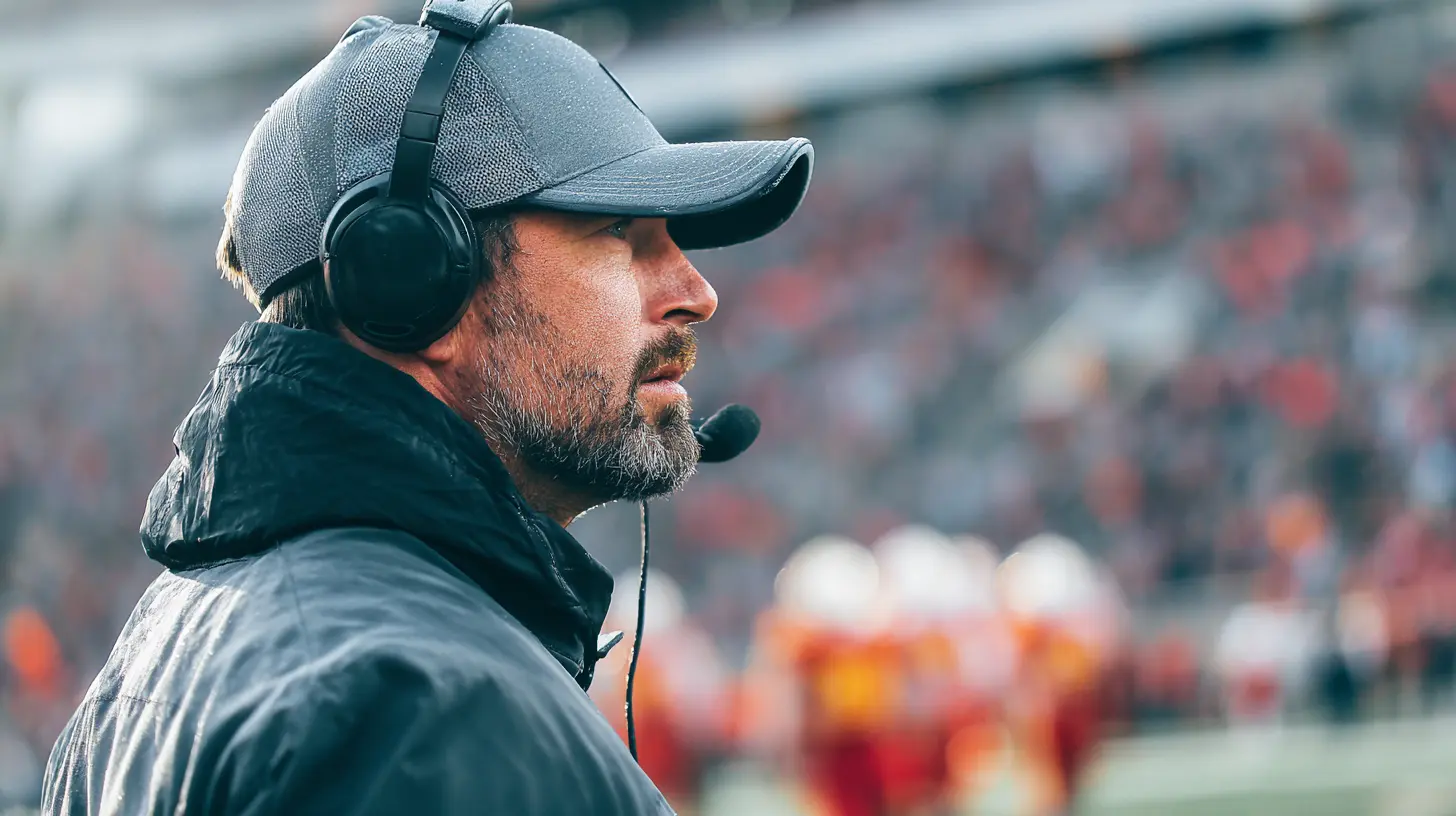
This is the ability to diagnose what an opponent is doing and counter it within a drive or a period, not at halftime. The best coaching staffs in 2026 will operate with a designated "adjustment officer" in the booth whose only job is to track opponent tendencies in real time and feed two or three actionable counters to the head coach between series.Why it works: Most games are decided in the middle two quarters, when both teams have settled into their opening scripts. The team that abandons a failing script faster gains possessions and field position. The trade-off is that constant adjustment can destabilize your own players. A counter that your quarterback or point guard has not rehearsed is worse than a familiar play that gains four yards. The best staffs balance speed of adjustment against installation cost, and they rehearse counters in practice so the adjustment is fast and familiar.
When it backfires: Against opponents who bait adjustments. Some coordinators deliberately show a formation early to lure a counter, then have a second-layer answer ready. Coaches who adjust too eagerly walk into traps. The practical advice: adjust to repeated behavior, not single plays.
Axis 2: Personnel Grouping and Mismatch Hunting
The chess match of the 2026 season will be about forcing the opponent into personnel packages they dislike. On defense, that means dictating whether the offense plays big or small. On offense, it means attacking the specific defender who is on the field only because of down-and-distance rules or substitution patterns.A concrete example from football: a defensive coordinator who rotates heavy personnel onto the field on first down invites an offense to go tempo and prevent substitutions. A coach who recognizes this will script tempo series for exactly those moments. The matchup outcome is decided before the snap by which coach controls the substitution rhythm.
The nuance: mismatch hunting requires roster depth. Teams without versatile players cannot exploit mismatches even if the coach sees them. This is why roster construction and coaching philosophy must align. A coach who loves small-ball lineups but has no switchable defenders is fighting his own front office. Before judging a coach's in-game decisions, check whether the roster actually supports them.
Axis 3: Clock, Timeout, and End-of-Half Management
This is the most measurable and least forgiving axis. End-of-half and end-of-game scenarios are where coaching matchups become binary: one staff prepares specific scenarios weekly, the other improvises. In 2026, expect the best staffs to run weekly "chaos periods" in practice, rehearsing down-and-distance and clock combinations with the actual communication equipment they will use on game day.Why it works: These situations are rare enough that players cannot rely on instinct, but common enough that preparation pays off several times a season. The staff that has rehearsed the 40-second scenario with a backup quarterback and a silent count will execute it; the staff that has not will burn a timeout and lose eight seconds.
Common mistake: Over-preparing for exotic scenarios at the expense of basic ones. Coaches sometimes drill the double-lateral play and neglect the simple "get out of bounds" discipline. Best practice is a tiered rehearsal plan: the five most common end-of-half scenarios get weekly reps, the exotic ones get a walkthrough.
Axis 4: Halftime and Between-Game Counterpunching
Halftime adjustments get romanticized, but the real edge in 2026 is between games: the ability to take a loss, diagnose the structural cause, and change the plan for the rematch. With expanded playoffs and more repeat matchups, the coach who wins the second meeting is often the one who lost the first and treated it as a data-gathering exercise.This is where coaching matchups become a season-long narrative. A staff that hides its real intentions in a regular-season loss, saving a counter for a potential playoff meeting, is playing a longer game. It is a legitimate strategy, but it carries risk: you have to actually make the playoffs, and players have to buy into a loss that was partly strategic. Coaches who attempt this without clear internal communication lose the locker room. The trade-off is real, and readers should be skeptical of analysts who call every conservative game plan "saving something for later."
How to Evaluate a Coaching Matchup Before Game Day
You do not need insider access to assess these axes. You need a repeatable process. Here is one that works for any sport.Step 1: Chart the opening scripts. For each team, log the first 10 to 15 plays or possessions from the last three games. Identify what each staff likes to establish early. Then ask: which opening script matches up badly against the opponent's early tendencies?
Step 2: Track adjustment latency. Note the first series after halftime for each team across several games. How quickly did the staff change what was not working? A staff that repeats a failing approach for a full quarter is giving away possessions.
Step 3: Audit situational preparation. Pull every end-of-half possession from the season. Count timeouts burned unnecessarily, delay-of-game penalties, and wasted clock. These are coaching fingerprints, not player mistakes.
Step 4: Check the substitution rhythm. In sports with free substitution, watch who controls the pace of personnel changes. The team forcing the other to substitute on its terms usually wins the matchup battle.
Step 5: Compare staff continuity. A staff with a new coordinator on one side of the ball is a wild card. New coordinators often bring scheme changes that take half a season to install. In 2026, with several high-profile coordinator moves expected, continuity itself becomes a matchup advantage.
Real-World Patterns Worth Studying
You do not need invented statistics to see these dynamics. The patterns show up in any sport with coaching trees and repeated matchups.In football, the classic example is the offensive coach who scripts tempo to neutralize a substitution-heavy defense. The counter is a defensive coach who simplifies his package so he can stay on the field. When these two meet, the game becomes a test of which staff prepared the simpler, faster answer. The coach with the simpler system usually wins because simplicity survives chaos.
In basketball, the matchup often comes down to which coach forces the other to abandon his preferred coverage. A coach who switches everything forces the offense into isolation; a coach who drops back invites pull-up shooting. The winning staff is the one whose players can execute the second option in the coverage, because the first option will be taken away.
In hockey, the line-matching game is the purest form of coaching matchup. The home coach gets the last change, which is a structural advantage, but only if he uses it deliberately. Coaches who match lines reactively rather than proactively give away the advantage. The best ones dictate the matchup they want and force the opponent to react.
The common thread: coaching matchups are won by the staff that makes the opponent play its second-best option. That is a more useful lens than "who has the better coach."
Common Mistakes and Misconceptions
Misconception: The coach with the better record is the better in-game coach. Records are noisy. A coach can win 12 games with a talented roster and still be a liability in situational football. Evaluate the process, not the standings.Mistake: Overweighting the head coach. In 2026, coordinator quality matters enormously. A head coach who delegates well beats a micromanager with a weaker staff. When you assess a matchup, assess the coordinators too.
Mistake: Treating analytics as a substitute for judgment. The model tells you the expected value of going for it on fourth down. It does not tell you that your right guard is playing hurt or that the opponent's punt returner is one hit away from a big return. Coaches who use models as a starting point and then apply game-specific context are the ones who get the edges. Coaches who follow the chart blindly become predictable.
Misconception: Halftime speeches matter. They matter far less than halftime information. The staff that delivers two specific, actionable adjustments at halftime beats the staff that delivers emotion.
Mistake: Ignoring special teams coaching. In close games, special teams is often the matchup within the matchup. A coordinator who has drilled fake punts and return counters can swing a game in one play. When comparing staffs, do not skip the third phase.
Practical Recommendations for Different Readers
If you coach: Build an adjustment officer role, even at the high school level. One assistant with a tablet and a clear job description can transform your in-game responsiveness. Rehearse end-of-half scenarios weekly with the actual communication equipment. Simplify your system so players can execute counters without thinking.If you analyze or write about games: Replace "good coach" language with axis-specific language. Say "this staff has slow adjustment latency" instead of "this staff is outmatched." It is more accurate and more useful.
If you bet or play fantasy sports: Weight situational coaching metrics more heavily in close spreads. A game projected within three points is often decided by timeout management and end-of-half execution, not talent.
If you are a fan: Watch the first five minutes after halftime and the final two minutes of each half. Those windows reveal more about coaching quality than the rest of the game combined.
What to Watch in 2026
The 2026 season will reward staffs that treat coaching as a system, not a personality. Watch for three signals: which teams have dedicated adjustment roles on staff, which teams rehearse chaos situations weekly, and which teams force opponents into second-best options. Those three signals will predict key outcomes better than any preseason ranking.The teams that win the games that matter will not always have the best players. They will have the staffs that win the matchup within the matchup, the quiet chess game that decides the loud ones.
all images in this post were generated using AI tools
Category:
Game PredictionsAuthor:

Everett Davis