Key Matchups to Circle on the 2026 College Football Calendar
10 October 2026
The 2026 college football season arrives with a rare kind of gravity. It is the second year of the expanded twelve-team College Football Playoff, and the first full season in which the sport's new conference geography has settled into something resembling a stable map. The novelty of realignment has worn off. What remains is a schedule packed with genuine stakes, old wounds, and fresh grudges.
This is not a list of every big game. It is a guide to the matchups that will shape the playoff picture, define conference races, and produce the kind of moments that get replayed for years. I will explain why each game matters, what to watch for, and what is genuinely at stake when kickoff arrives.

Why the 2026 Schedule Carries Extra Weight
Before diving into individual games, it helps to understand the forces shaping this season.The twelve-team playoff format means more teams enter November with a realistic path to the bracket. That changes how we should read the schedule. In the old four-team era, a single September loss could end a season. Now, a loss in September is survivable if a team runs the table in conference play. This creates a different kind of pressure. Early-season games matter less for elimination and more for seeding and reputation.
At the same time, conference championship games carry enormous value. A team that wins its league title is almost always in. A team that loses a close championship game is usually still in. A team that skips the championship game entirely is at the mercy of the committee's eye test.
The practical takeaway: circle the games that decide division and conference races first, then circle the non-conference showcases that shape national perception.

The Non-Conference Showcases That Set the Tone
Non-conference games in 2026 are not just exhibitions. They are resume builders, and with the playoff field larger, a strong non-conference win can be the difference between a home playoff game and a road trip in December.Texas at Ohio State (Week 2)
This is the headliner. Texas travels to Columbus for a rematch of their 2025 playoff semifinal, a game that ended with controversy and a lingering sense that neither side had fully proven its point.Why it matters: Both programs expect to be in the playoff conversation. A win here gives the victor a signature non-conference scalp that the committee will weigh heavily in November. A loss does not end anything, but it removes margin for error in conference play.
What to watch: The line of scrimmage. Ohio State's defensive front has been among the nation's best at generating pressure without extra rushers. Texas has invested heavily in its offensive line through the transfer portal. If the Longhorns can run the ball between the tackles, they control tempo and keep Ohio State's explosive offense off the field. If they cannot, the Buckeyes will force third-and-long and tee off.
The trade-off: Texas scheduled this game knowing it would be a road environment against a top-five opponent. That is admirable, but it also means a loss could leave the Longhorns needing a perfect SEC season to earn a top-four seed. Ohio State faces the same calculus. Neither team can afford to treat this as a throwaway.
Notre Dame at Miami (Week 1)
A rivalry renewed, and a game with real playoff implications for both sides.Notre Dame's independent schedule gives it limited opportunities for marquee wins. Miami, now firmly established in the ACC, needs non-conference victories to bolster its case if it does not win the league.
Why it matters: The committee has historically rewarded teams that play difficult schedules. Notre Dame's schedule is often criticized for lacking depth. A road win at Miami would silence that critique for at least a year.
What to watch: Miami's quarterback play. The Hurricanes have cycled through talented but inconsistent passers in recent years. If their starter has taken a step forward, this game becomes a coin flip. If not, Notre Dame's defense, which returns most of its secondary, could smother the Hurricanes.
Common mistake: Fans often dismiss Week 1 games as too early to matter. That is wrong. The committee evaluates the full body of work, and a Week 1 loss to a quality opponent is far less damaging than a November loss to a mediocre one. The timing matters less than the opponent's final record.
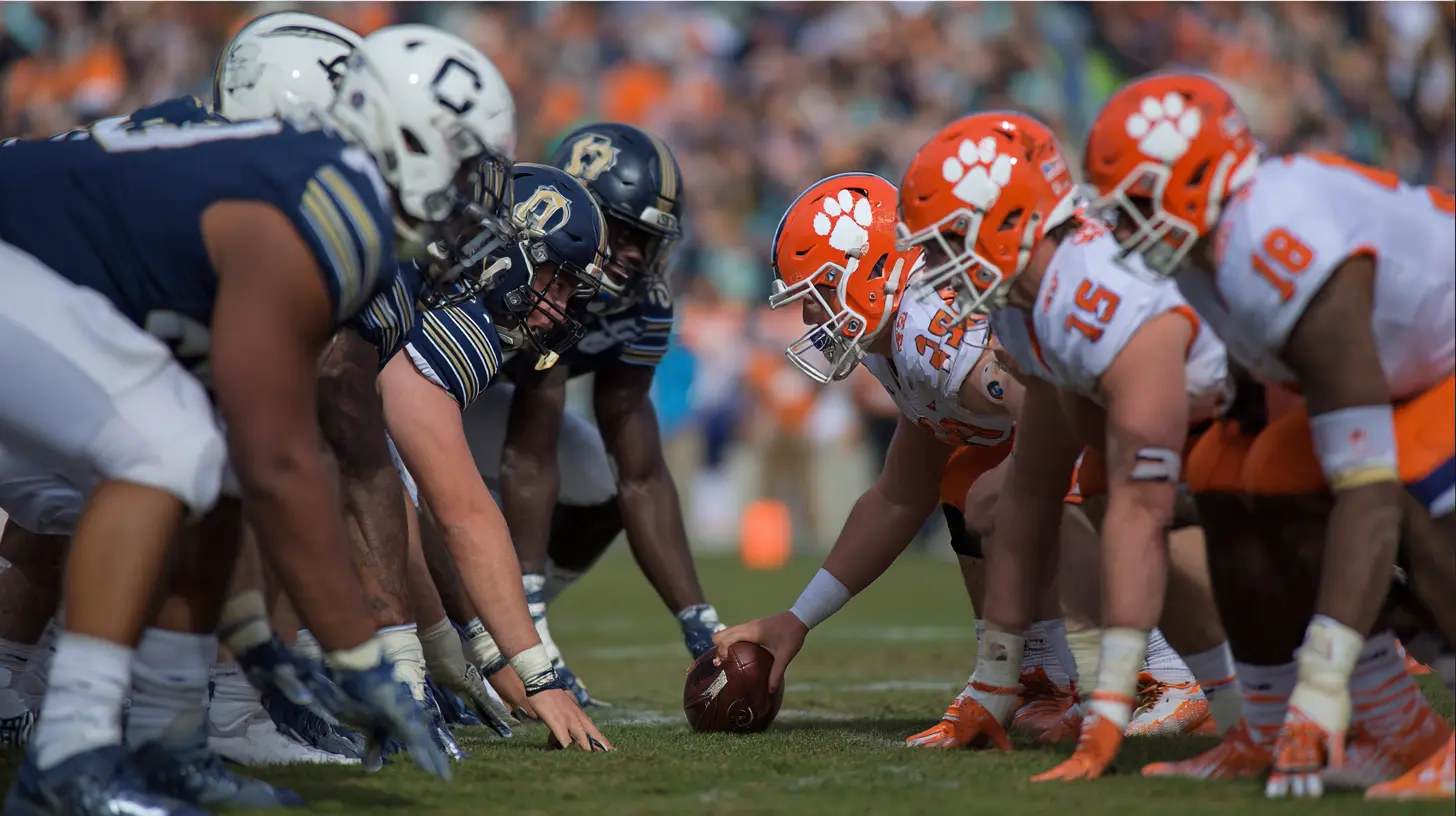
Conference Clashes That Decide the Bracket
Once conference play begins, the stakes escalate. These are the games most likely to determine who wins the SEC, Big Ten, Big 12, and ACC.Georgia vs. Alabama (Week 5)
The rivalry that defined the 2010s and 2020s continues to carry weight.Why it matters: The winner of this game has a clear inside track to the SEC championship game. The loser faces a difficult path, especially if it already has a non-conference loss.
What to watch: Georgia's offensive line versus Alabama's pass rush. The Bulldogs have rebuilt their line after losing multiple starters to the NFL. Alabama's edge rushers are among the fastest in the country. If Georgia's tackles hold up, the Bulldogs can attack downfield. If not, it will be a long afternoon.
Nuance: This game is often framed as a coaching chess match. That is true, but the more reliable predictor is turnover margin. In the last decade, the team that wins the turnover battle in this matchup wins the game roughly eighty percent of the time. That is not a coincidence. Both offenses are explosive enough to capitalize on short fields.
Ohio State at Penn State (Week 8)
A whiteout game in Happy Valley, and a potential preview of the Big Ten championship.Why it matters: Penn State has been on the cusp of the playoff for years. A win over Ohio State would likely vault the Nittany Lions into the top four and give them a tiebreaker in the Big Ten race.
What to watch: Penn State's ability to run the ball against Ohio State's defensive line. The Nittany Lions have two experienced running backs and a mobile quarterback. If they can sustain drives and keep Ohio State's offense on the sideline, the crowd becomes a factor. If Ohio State jumps out to an early lead, the whiteout loses its bite.
When this game should not be overvalued: If both teams enter undefeated, the loser is still in good shape for an at-large bid. The playoff field is large enough that a single loss to a top-five team does not eliminate anyone. Fans should resist the urge to declare the loser "done."
Texas vs. Oklahoma (Week 6)
The Red River Rivalry at the Cotton Bowl remains one of the sport's great spectacles.Why it matters: In the SEC era, this game carries conference stakes on top of rivalry bragging rights. The winner gains a tiebreaker and a signature win. The loser must navigate a brutal SEC schedule with little margin.
What to watch: The atmosphere. The Cotton Bowl splits fans at the fifty-yard line, creating a unique pressure cooker. Teams that handle chaos well tend to win. Teams that commit early penalties or turnovers often unravel.
Practical advice for fans: If you plan to attend, buy tickets early. This game consistently sells out, and prices on the secondary market climb sharply after Labor Day. Also, prepare for heat. Early October in Dallas can still reach the nineties.

The Big 12 and ACC Games That Fly Under the Radar
The expanded playoff means more conferences have realistic paths to multiple bids. The Big 12 and ACC are no longer afterthoughts.Utah at Kansas State (Week 7)
This is a game that could decide the Big 12's top seed.Why it matters: Utah's transition into the Big 12 has been smoother than many expected. Kansas State has quietly built one of the most consistent programs in the country. The winner of this game likely controls its destiny for a conference championship berth.
What to watch: Kansas State's quarterback run game. The Wildcats have long relied on designed runs for their signal-caller. Utah's defense, which is disciplined and physical, will try to force third-and-long. If Kansas State stays ahead of the chains, it can wear down the Utes.
Common misconception: Many fans assume the Big 12 is a pass-first league. That has not been true for years. The conference has produced some of the nation's best rushing attacks, and this game will likely be decided on the ground.
Clemson at Louisville (Week 9)
A Friday night game with major ACC implications.Why it matters: Clemson's playoff hopes often hinge on avoiding a mid-season stumble. Louisville has become a thorn in the Tigers' side, with a high-powered offense that can score quickly.
What to watch: Clemson's secondary. The Tigers have recruited well at cornerback, but they have struggled against elite receivers. Louisville's receiving corps is among the best in the ACC. If Clemson cannot generate pressure with four rushers, it will have to blitz, which leaves the secondary exposed.
Trade-off: Clemson could play conservatively and try to win with defense and field position. That approach works against lesser opponents, but Louisville's offense is too explosive to contain for sixty minutes. The Tigers will need to score in the thirties to win.
Rivalry Week: The Games That Always Matter
Rivalry week in 2026 falls at the end of November. These games are not just about bragging rights. They often decide playoff seeding and conference championships.Michigan at Ohio State (Week 13)
The Game. No explanation needed for college football fans, but the stakes deserve context.Why it matters: The winner of this game has won the Big Ten in each of the last several seasons. With the expanded playoff, the loser is not eliminated, but a loss here often means a road playoff game instead of a home one.
What to watch: Michigan's offensive identity. The Wolverines have shifted toward a more balanced attack in recent years. Ohio State's defense is built to stop the pass first. If Michigan can run the ball effectively, it shortens the game and keeps Ohio State's offense off the field. If not, the Buckeyes' receivers will exploit single coverage.
Nuance: This game is often decided in the trenches, but special teams have played a decisive role in recent meetings. A blocked punt or a missed field goal has swung the outcome more than once. Do not overlook the kicking game.
Auburn at Alabama (Week 13)
The Iron Bowl always delivers chaos.Why it matters: Alabama's playoff hopes often hinge on this game. Auburn would love nothing more than to play spoiler.
What to watch: Auburn's defensive front. The Tigers have historically played Alabama tough when they can pressure the quarterback. If Auburn's edge rushers can disrupt Alabama's timing, this game becomes a rock fight. If not, Alabama's skill players will pull away.
Real-world example: In 2013, Auburn returned a missed field goal for a touchdown to win the SEC West. In 2019, Alabama missed a potential game-tying field goal. The lesson: never assume this game is over until the clock hits zero.
How to Watch Smart: Practical Advice for Fans
The 2026 schedule is packed. Here is how to prioritize your viewing without burning out.Identify Your Tier One Games
Tier one games are the ones that directly affect the playoff picture. These are the games you clear your calendar for. Examples include Texas at Ohio State, Georgia vs. Alabama, and Michigan at Ohio State.Record the Tier Two Games
Tier two games are intriguing but less consequential. Maybe it is a rivalry game between two mid-tier teams, or a non-conference matchup with a good storyline. Record these and watch them on Sunday morning while drinking coffee.Skip the Blowouts
Every week has games that look competitive on paper but turn into routs. Do not feel obligated to watch every minute. The beauty of modern streaming is that you can catch up on the important moments in ten minutes.Common Mistake: Overreacting to Week 1
Every year, fans and media declare a team "back" or "done" after the first weekend. That is almost always wrong. Teams improve. Freshmen grow up. Coaches adjust. A loss in August or September is a data point, not a verdict.What Makes the 2026 Season Different
Three factors separate 2026 from previous seasons.First, the playoff field is twelve teams. That means more fan bases have something to play for in November. It also means the committee has more difficult decisions. A team that wins ten games but misses its conference championship game might still earn an at-large bid. A team that wins nine games but plays a brutal schedule might get in over a ten-win team from a weaker league.
Second, conference realignment has stabilized. The SEC and Big Ten are now super-conferences. The Big 12 and ACC have solidified their membership. That stability means schedules are more predictable, and rivalries are more likely to be preserved.
Third, the transfer portal has changed roster construction. Teams are more experienced than ever, but they are also more volatile. A team that looks dominant in September might lose its starting quarterback to injury in October and struggle to replace him. Depth matters more than ever.
Final Thoughts: What to Circle and Why
The 2026 college football calendar is not just a list of games. It is a story waiting to be written. The matchups above are the chapters that will matter most.Circle Texas at Ohio State because it sets the national tone. Circle Georgia vs. Alabama because it decides the SEC. Circle Michigan at Ohio State because it always does. Circle the Big 12 and ACC games because the expanded playoff gives those leagues real power.
Most of all, circle the games that mean something to you. College football is at its best when it is personal. A rivalry game between two teams you care about is worth more than a national showcase between teams you do not.
Watch with friends. Argue about the playoff rankings. Complain about the officiating. That is the point. The games are the framework, but the memories are what last.
all images in this post were generated using AI tools
Category:
Game PredictionsAuthor:

Everett Davis