Predicting the Major Upsets of the 2027 Season
12 October 2026
Every sports fan loves a good upset. The kind that makes you spill your drink, text your group chat in all caps, and question everything you thought you knew about a team. But predicting upsets is not about throwing darts at a board and hoping one lands. It is about reading the tea leaves, understanding the mechanics of chaos, and knowing where the fault lines are before the earthquake hits.
The 2027 season is still on the horizon, which means we have something better than hindsight. We have runway. We have the ability to look at roster trajectories, coaching changes, salary cap situations, draft capital, and schedule quirks before a single meaningful game is played. That is a luxury oddsmakers do not always give you, and it is one smart fans and analysts should exploit.
This is not a list of hot takes. It is a framework for thinking about upsets, followed by specific predictions grounded in the logic of how sports actually work. Some of these will hit. Some will miss. That is the nature of the exercise. But the reasoning behind each one matters more than the result, because that reasoning is what you can carry into future seasons.
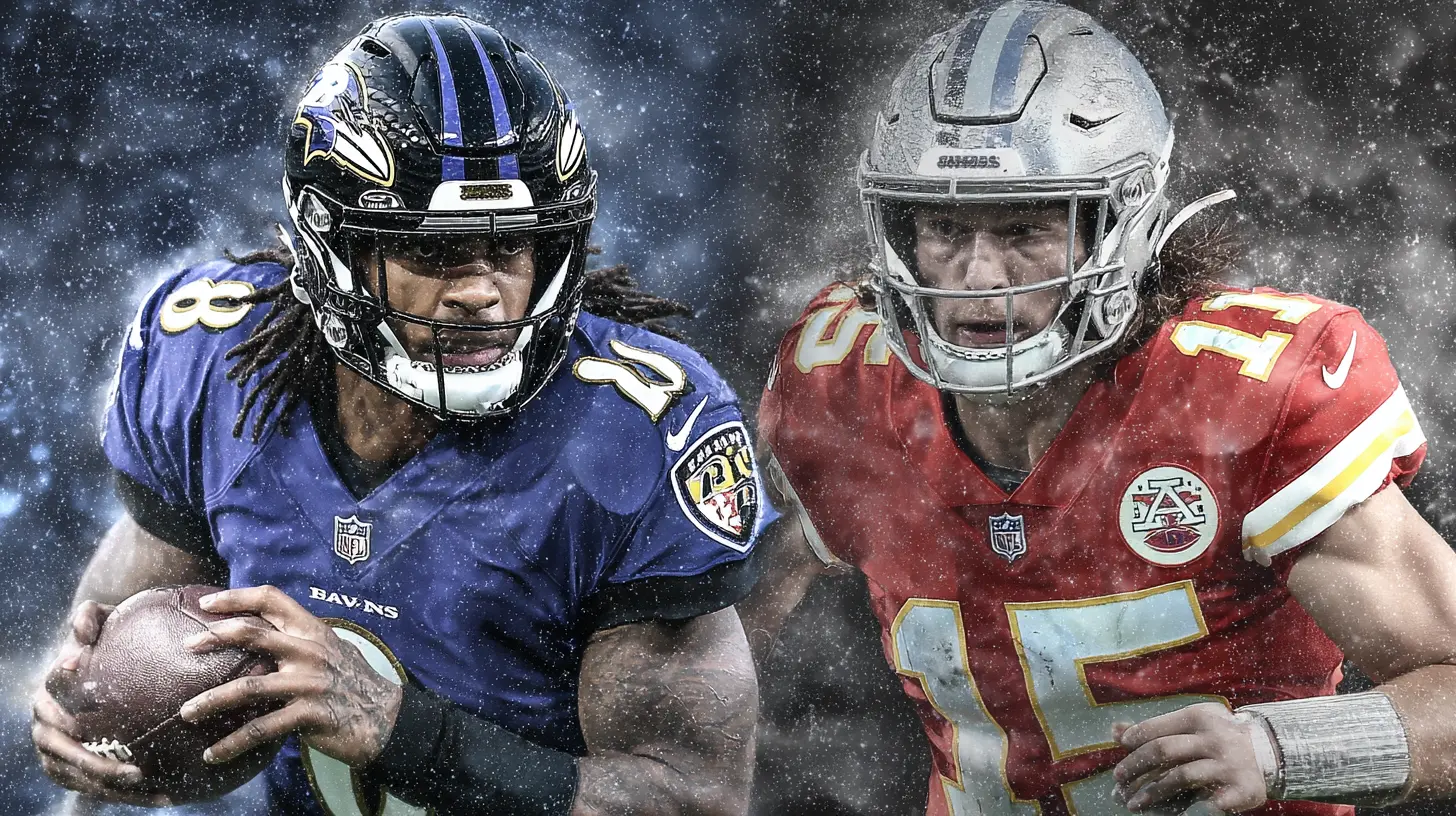
Why Upsets Happen More Often Than People Think
The first mistake casual fans make is treating an upset as a fluke. It is almost never a fluke. It is usually the visible result of invisible pressures that have been building for months or years.Consider what actually drives an upset:
Roster turnover. Teams that lose key players to free agency, trades, or retirement often do not replace them with equal talent. They replace them with cheaper talent, younger talent, or scheme fits that take time to gel. The drop-off is gradual in the offseason and sudden in the standings.
Coaching transitions. A new head coach or coordinator brings new systems, new terminology, and new expectations. Even when the new coach is objectively better, the first year is often a step back. Players are thinking instead of reacting. That half-second of hesitation is all an underdog needs.
Age curves. Every roster has a cliff. A team that looks stacked on paper can fall off that cliff in a single season when its core hits the wrong side of thirty. The decline is rarely linear. It is more like a shelf that suddenly gives way.
Schedule luck. Strength of schedule is not just a preseason talking point. A team that feasted on weak opponents one year can face a gauntlet the next. Conversely, a middling team can catch a break with timing, bye weeks, and home games.
Complacency and hunger. This is the hardest factor to quantify and the most important. Teams that have won recently sometimes lose the edge that made them winners. Teams that have lost painfully often find it. Hunger is not a statistic, but it shows up in fourth quarters.
Injury variance. Some teams are genuinely unlucky. Others are reckless with player workloads. Either way, a single injury to a quarterback, a point guard, or a starting pitcher can swing a season by five to ten wins.
Understanding these drivers is the foundation of any credible upset prediction. Without them, you are just guessing.
The Anatomy of a Predictable Upset
Not all upsets are created equal. Some come out of nowhere. Others announce themselves months in advance if you know where to look.A predictable upset usually has at least three of these five markers:
1. A defending champion or perennial contender with significant offseason losses. Not just role players. Difference-makers.
2. A challenger with continuity. Same coach, same core, same system, plus one or two meaningful additions.
3. A schedule imbalance. The favorite faces a brutal stretch while the challenger gets a soft landing.
4. A coaching mismatch. The challenger's staff has had a full offseason to study the favorite's tendencies.
5. A motivational gap. The favorite has been there before. The challenger has been waiting.
When you see four or five of these markers, the upset is not a long shot. It is a value bet.
The 2027 Upset Candidates: A Sport-by-Sport Breakdown
Let us get specific. The following predictions are based on current trajectories, known roster situations, and the structural logic outlined above. They are not guarantees. They are educated forecasts.Basketball: The Fall of a Superteam
Superteams are fragile. They are built on the assumption that talent always trumps chemistry, and that assumption is wrong more often than NBA front offices like to admit.The most likely basketball upset in 2027 involves a team that has spent the last few years stacking stars at the expense of depth. By 2027, that team will be facing a second apron tax bill that makes roster flexibility nearly impossible. Meanwhile, a younger, deeper team in the same conference will have spent three years developing internally, drafting well, and building a system that does not depend on any single player.
The upset will not happen in a single game. It will happen over a seven-game series where the superteam's stars are worn down by a relentless opponent that plays nine deep and switches everything on defense. The superteam will win the headline battle. The deeper team will win the war.
Why this works: Depth beats top-heavy talent in the playoffs because playoff basketball is a war of attrition. The team that can absorb a cold shooting night from its best player and still win is the team that advances.
What could go wrong: If the superteam's stars stay healthy and shoot lights out, talent wins. That is the risk. But the odds favor the deeper team over a long series.
Football: The Mid-Market Team That Crashes the Playoff Party
In the NFL, the margin between a division winner and a last-place team is often four or five plays. That is why the league produces so many worst-to-first stories.The 2027 candidate here is a team that has been quietly building through the draft while its division rivals have been mortgaging the future for short-term wins. This team has a young quarterback on a rookie contract, a defense that finished in the top ten in yards per play the previous season, and a schedule that avoids the toughest cross-conference matchups.
The upset is not that this team makes the playoffs. The upset is that it wins a playoff game against a team that most people assumed was a lock for the conference championship.
Why this works: Rookie contract quarterbacks are the most valuable asset in football. They allow teams to spend elsewhere. When that quarterback takes a Year 3 leap, the team around him is suddenly much better than its reputation.
What could go wrong: Young quarterbacks are unpredictable. If he regresses or gets injured, the whole thing collapses. Also, playoff experience matters. A first-time playoff team often loses to a veteran one.
Baseball: The Wild Card Team That Nobody Wants to Face
Baseball is the sport most prone to upsets because the playoffs are a small sample. A 100-win team can lose a five-game series to an 85-win team and nobody blinks.The 2027 candidate is a team that squeaks into the playoffs with 86 or 87 wins, but has the one thing that matters most in October: two dominant starting pitchers and a bullpen that does not walk people.
This team will face a division winner that won 98 games on the back of a deep lineup and a mediocre rotation. In a short series, the deep lineup does not matter as much because the mediocre rotation has to face the other team's aces twice.
Why this works: Playoff baseball rewards pitching and defense over hitting. The team with the best two starters in a series wins more often than the team with the best overall roster.
What could go wrong: If the underdog's ace gets shelled in Game 1, the whole plan falls apart. Also, baseball is random. Even the best-laid plans can be undone by a bloop single and a bad call.
Hockey: The Team That Gets Hot at the Right Time
The Stanley Cup playoffs are a two-month tournament that rewards health, goaltending, and momentum more than regular season dominance.The 2027 candidate is a team that spends most of the season in fourth or fifth place in its division, then catches fire in March after a deadline trade for a physical defenseman and a bottom-six forward who can kill penalties.
This team will face a Presidents' Trophy winner that has been the best team in the league from October to April. But the Presidents' Trophy winner will have a banged-up blue line and a goaltender who has played 65 games and looks tired.
Why this works: The playoffs are a different sport. Heavy teams that can forecheck and cycle the puck wear down skill teams over a seven-game series. The team that is healthiest and hungriest in April often wins in June.
What could go wrong: Hot goaltending is unpredictable. If the underdog's goalie turns back into a pumpkin, the series is over in five.
Soccer: The Giant That Stumbles
In domestic soccer leagues, upsets are less about single games and more about season-long slippage.The 2027 candidate is a traditional power that has won multiple titles in the last five years but has failed to refresh its squad. Its key players are now 30 or older. Its manager is in his fifth or sixth year, and the message is getting stale. Meanwhile, a club with new ownership and a smart sporting director has spent two years assembling a young, hungry squad that plays a high-pressing style.
The upset is not that the traditional power finishes fourth. The upset is that it finishes outside the top four entirely, and the challenger takes its spot.
Why this works: Soccer seasons are long. Fatigue, motivation, and squad depth matter more than a single star player. A team that has won everything often struggles to find the same intensity for a Tuesday night match against a mid-table side.
What could go wrong: Big clubs have resources. They can buy their way out of trouble in January. Also, the challenger might not have the experience to handle the pressure of a title race.

Common Mistakes When Predicting Upsets
Even experienced analysts fall into traps. Here are the ones to avoid.Mistake 1: Confusing a slow start with a decline. A good team that starts 2-4 is not necessarily done. Sometimes it is just a matter of schedule and variance. Wait for structural evidence before calling for a fall.
Mistake 2: Overweighting preseason hype. Every year, a team wins the offseason and loses the regular season. Hype is not the same as chemistry.
Mistake 3: Ignoring coaching. A great roster with a bad coach loses to a good roster with a great coach more often than people think. Coaching matters most in the playoffs, when adjustments decide series.
Mistake 4: Assuming last year's result predicts this year's. Sports are not linear. The team that won 55 games last year might win 45 this year. The team that won 35 might win 48.
Mistake 5: Forgetting about health. The best predictor of playoff success is not talent. It is which team is healthiest in April, May, and June.
How to Use These Predictions
This article is not a betting slip. It is a thinking tool.If you are a fan, use these frameworks to understand why your team might be vulnerable or why a rival might be ready to pounce. If you are an analyst, use them to structure your own predictions. If you are just here for the hot takes, enjoy them, but remember that the reasoning is the point.
The 2027 season will produce upsets that nobody saw coming. That is what makes sports fun. But the biggest upsets are often the ones that were hiding in plain sight. The team with the young quarterback. The roster with the depth. The club with the hungry coach. Those are the stories that will define the year.
So keep an eye on the teams that are quietly building. Keep an eye on the champions that are quietly aging. And keep an eye on the schedule, because sometimes the biggest factor in an upset is not who you play, but when you play them.
all images in this post were generated using AI tools
Category:
Game PredictionsAuthor:

Everett Davis
Discussion
rate this article
1 comments
Easton Fuller
This season holds so much potential for surprises. It's exciting to think about which teams might defy the odds. I'm looking forward to seeing how it all unfolds... Let's enjoy the ride!
October 12, 2026 at 4:10 AM