The Clash of Styles: The Match That Pitted Two Philosophies Against Each Other
29 November 2026
Every sport has its defining contests, but the most memorable ones rarely hinge on talent alone. They become reference points because they force a fundamental question onto the field: which way of seeing the game is right? When two teams or two athletes arrive with opposite philosophies, the result is more than a scoreline. It is an argument settled in real time, in front of everyone, with no room for revisionism.
This article examines what actually happens when contrasting styles collide, why some philosophies dominate while others collapse under pressure, and how coaches, athletes, and analysts can read these matchups with more clarity. The goal is not to celebrate one approach over another. It is to understand the mechanics of stylistic conflict so you can recognize it, prepare for it, and make better decisions when your own philosophy is on the line.

What "Style" Really Means in Competitive Sport
Style is often reduced to aesthetics: a possession-based team versus a direct one, a counterpuncher versus an aggressor, a run-first offense versus a spread passing attack. That framing is useful for commentary but too shallow for analysis. Style, in a competitive sense, is a set of default decisions a team or athlete makes under pressure. It is the answer to questions like: Where do we accept risk? How do we manage space? What do we do when the plan breaks?Two teams can share the same formation or the same base offense and still play completely different styles, because style lives in decision-making priorities, not in shapes on a whiteboard. A side that values control will slow the game down even when chaos would favor it. A side that values chaos will speed the game up even when control would be safer. These priorities are usually trained so deeply that they become reflexes, which is exactly why they are so hard to abandon mid-match.
This matters because stylistic clashes are not just tactical puzzles. They are tests of identity. Asking a possession team to sit deep and counter is not a small adjustment; it is a request to stop being itself. Understanding that psychological weight explains why so many "obvious" tactical fixes fail in practice.
The Anatomy of a Philosophical Matchup
A genuine clash of philosophies has three layers, and most analysis only scratches the first.Layer One: The Structural Battle
This is the visible layer. One side wants to build from the back; the other wants to press high. One side wants to slow the tempo; the other wants to accelerate every transition. Structural battles are about space and time: who gets to decide where the game is played, and at what speed.Layer Two: The Psychological Battle
Styles carry implicit beliefs about risk. A high-pressing team believes that the opponent will eventually crack under sustained pressure. A low-block team believes that frustration will make the opponent reckless. When these beliefs meet, the match becomes a test of conviction. The first side to abandon its principles usually loses the argument, and often the match.Layer Three: The Adaptation Battle
The deepest layer is about who can bend without breaking. The best teams do not abandon their philosophy under pressure; they find a version of it that survives the specific threat in front of them. This is where great coaching separates itself from good coaching. A rigid system loses to a well-prepared opponent. A flexible system keeps its identity while changing its methods.
Why Style Clashes Are So Decisive
Predictability Is a Weapon and a Vulnerability
Every coherent style is built on repeatable patterns, and repeatable patterns are what make elite execution possible. A team that has rehearsed its pressing triggers thousands of times will press better than a team improvising. But the same repetition gives opponents something to study. The more distinctive your style, the more film exists of it, and the more precisely an opponent can prepare.This creates a real trade-off. A team with a strong identity wins most matches on autopilot, but it hands elite opponents a clear blueprint. A team with no identity is harder to prepare for but rarely executes at a high enough level to matter. Most successful programs resolve this by keeping a stable core philosophy while varying the details: different pressing angles, different build-up routes, different set-piece looks. The identity stays; the surface changes.
The Matchup Effect
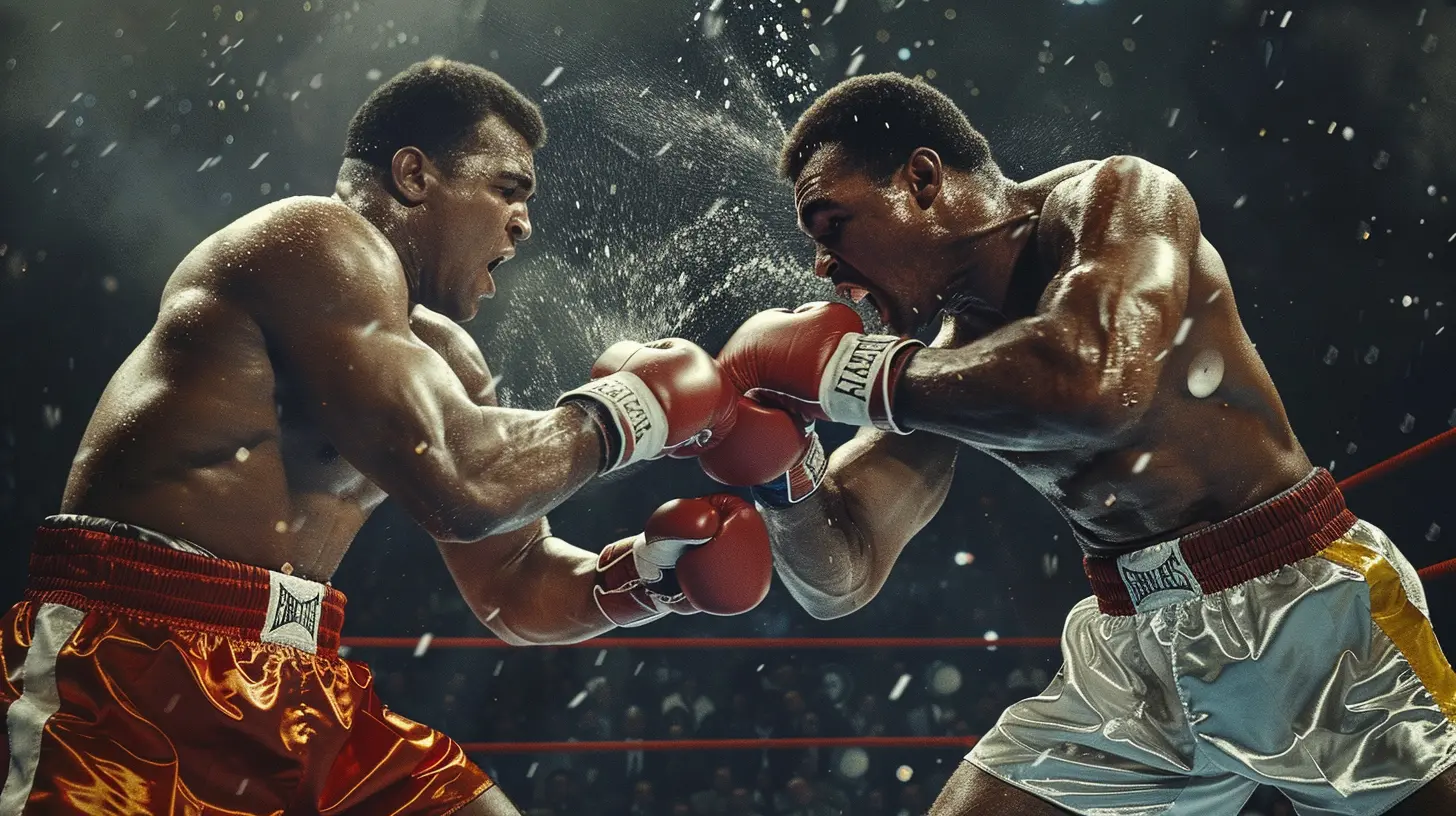
In individual sports, the matchup effect is easiest to see. A boxer with excellent footwork and a long jab can dominate slower opponents, but that same style can struggle against a relentless pressure fighter who cuts the ring and refuses to let the fight happen at range. Neither fighter is "better" in the abstract. The styles interact, and the interaction decides the contest.The same logic applies in team sports. A possession-heavy soccer team can be suffocated by coordinated pressing. A run-heavy football offense can be forced into obvious passing situations by an opponent that wins early downs. A perimeter-oriented basketball team can be punished inside by a team that controls the glass. The lesson is universal: evaluate styles by how they interact, not in isolation.
Why the "Better Team" Sometimes Loses
Fans often explain upset losses with effort, luck, or refereeing. Sometimes those factors matter. But many upsets are stylistic: the losing side was the stronger team in general, yet its philosophy was the wrong tool for that specific opponent. This is why tournament formats reward adaptability. A league season rewards consistency; a knockout competition rewards the ability to solve one problem at a time.
Case Studies in Conflicting Philosophies
The examples below describe well-known stylistic patterns rather than specific matches, since the principles matter more than any single result.Possession Versus Pressing
This is the most discussed clash in modern soccer. The possession side wants to progress through short passes and controlled circulation. The pressing side wants to force errors in dangerous areas by compressing space and time.Why it works for the pressing side: possession structures rely on predictable passing lanes, and pressing targets those lanes. If the press forces the ball into a low-percentage area or a weak distributor, the possession team's advantage evaporates.
Why it works for the possession side: a well-drilled team can bait the press, play through it, and attack the space left behind. The press is a high-risk investment; when it fails, the pressing team is exposed.
The deciding factor is usually the quality of the first pass under pressure and the discipline of the pressing shape. A press that arrives in ones and twos is easy to bypass. A press that arrives as a coordinated unit is genuinely difficult to escape.
Ground Game Versus Aerial Dominance in Combat Sports
In mixed martial arts, a wrestler who wants to control position and grind out a decision faces a striker who wants to keep the fight standing. The wrestler's philosophy is about removing the opponent's best weapon by changing the environment. The striker's philosophy is about keeping the fight in the space where technique translates into damage.The trade-off is clear. Wrestling-based control is often more reliable across a career because it depends less on timing and precision. Striking-based finishes are faster but require the fight to stay in a favorable range. The matchup hinges on distance management and the ability to impose the fight's location, which is why "where the fight takes place" is often more important than who is technically superior.
Run-First Versus Pass-First Football
An offense built on running the ball controls tempo, protects the defense, and wears opponents down. A pass-first offense creates explosive plays and forces defenses to defend the whole field. When they meet, the game becomes a contest over downs and distance. The run-first team wants manageable third downs; the pass-first team wants to force the opponent into obvious passing situations where its own strength matters most.The common mistake here is assuming the more explosive offense always wins. In reality, the team that controls down and distance usually controls the game. Explosiveness without efficiency stalls; efficiency without explosiveness struggles to keep up in high-scoring games. The best offenses blend both, which is why pure philosophical extremes are rare at the highest level.
The Hidden Costs of Committing to a Style
Every philosophy has a bill that comes due.The Possession Bill
Possession-based teams pay in vulnerability to transitions. When they lose the ball in advanced areas, they are structurally exposed. They also pay in patience: against a disciplined low block, they can dominate the ball for long stretches without creating clear chances, and frustration can lead to forced passes and turnovers.The Pressing Bill
Pressing teams pay in energy and exposure. Sustained pressing is physically expensive, and a failed press leaves space behind it. Against opponents with excellent ball-playing defenders, pressing can become a wasted investment that drains legs for the final twenty minutes.The Counterattacking Bill
Counterattacking teams pay in control. They concede territory and possession by design, which means they must defend well for long periods and convert a small number of chances. When they fall behind, their entire philosophy becomes harder to execute, because the opponent no longer needs to commit numbers forward.The Power Bill
Physical, direct teams pay in adaptability. When an opponent matches their physicality or forces them into a faster, more technical game, they can run out of answers. Their strength becomes a ceiling as much as a floor.The practical takeaway: before committing to a philosophy, ask what it costs when it fails. A style you cannot afford to lose with is a style you cannot fully trust.
Common Mistakes When Preparing for a Style Clash
Mistake one: Preparing for the formation instead of the behavior. Knowing an opponent lines up in a certain shape tells you little. What matters is how they behave when they lose the ball, when they are pressed, and when the game state changes. Watch their reactions, not their alignment.Mistake two: Abandoning your identity too early. Panic adjustments usually make things worse. If your philosophy got you to this match, it deserves a chance to work with adjustments, not a full rewrite. Change the methods, keep the principles.
Mistake three: Overcorrecting for one threat. A team that spends all week preparing for an opponent's biggest strength often leaves itself exposed elsewhere. Balance preparation: neutralize the primary threat without handing the opponent a new one.
Mistake four: Ignoring game state. Philosophies are not static. A possession team trailing by a goal needs a different version of itself than a possession team protecting a lead. Prepare your style for multiple game states, not just the opening whistle.
Mistake five: Confusing effort with adaptation. Running harder is not a tactical adjustment. If the structure is wrong, more effort just means you lose in a more exhausting way.
How to Read a Style Clash in Real Time
Analysts and fans often watch the ball and miss the argument. Here is a practical framework for reading the match beneath the match.1. Identify each side's default risk. Who is comfortable playing dangerous passes? Who prefers safety? The team forced outside its risk comfort zone is the team under pressure.
2. Track where the game is played. Territory is a proxy for who is imposing their philosophy. If the game is being played in the areas one team prefers, that team is winning the argument even if the score is level.
3. Watch the first five seconds after turnovers. Transitions reveal philosophy more clearly than settled play. Does the team counter immediately or reset? Does the opponent counter-press or retreat?
4. Note the first tactical adjustment. The first meaningful change usually reveals which coach believes the original plan is losing. That is a signal about the direction of the match.
5. Check body language under frustration. Styles built on patience crack visibly when patience runs out. Styles built on aggression crack when aggression is met with equal force.
Best Practices for Coaches and Athletes
Build a philosophy, not a system. Systems are fragile because they depend on specific personnel and specific opponents. Philosophies are durable because they define priorities that survive changes in formation, roster, and game state.Rehearse the ugly version of your style. Every philosophy has a version that works when things go well and a version that must survive when they do not. Train the second version deliberately. A possession team should practice building out under intense pressure, not just circulating freely. A pressing team should practice pressing with ten men and tired legs.
Prepare two solutions for every major threat. If the opponent's primary strength is neutralized by plan A, have a plan B that addresses the same threat differently. Redundancy is not indecision; it is resilience.
Use video to study behavior, not highlights. Highlights show outcomes. Behavior shows process. Study how opponents react to adversity, because that is when their philosophy is most exposed.
Respect the opponent's identity. The most common cause of upset losses is contempt: assuming the opponent's style cannot hurt you. Every coherent philosophy has a way to win. Your job is to make that way as difficult as possible.
What This Means for Fans and Analysts
The next time a heavily favored team loses to a "lesser" opponent, resist the urge to explain it with cliches about heart or luck. Ask a sharper question: which philosophy was better suited to this specific contest? Often you will find that the winner did not play better in the abstract. It played better in the argument that actually took place.This lens also improves how you evaluate players. A player who looks ordinary in one system can look exceptional in another, because styles reward different skills. Judging talent without accounting for system fit is one of the most common analytical errors in sport.
Conclusion
The clash of styles is the engine of competitive drama because it turns every match into a referendum on how the game should be played. Possession against pressing, control against chaos, patience against aggression: these are not just tactical choices. They are beliefs about what wins, and every contest tests those beliefs against reality.The teams and athletes who endure are rarely the purest ideologues. They are the ones who keep a clear philosophy while staying flexible enough to survive the matchup in front of them. They understand that style is a tool, not a religion, and that the match is always asking a question. The great ones answer it without forgetting who they are.
all images in this post were generated using AI tools
Category:
Historic MatchesAuthor:

Everett Davis