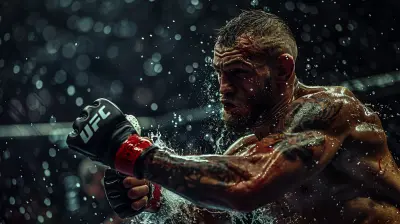
The Future of MMA: What’s Next for the Sport?
22 December 2025
Mixed Martial Arts (MMA) has evolved into a global phenomenon, captivating audiences with its high-octane action and dynamic blend of fighting styles. From the days of Royce Gracie dominating with Brazilian Jiu-Jitsu to the rise of superstars like Conor McGregor and Israel Adesanya, the sport has come a long way. But what does the future hold for MMA?
With emerging technology, evolving rules, and an ever-growing fan base, the sport is on the brink of some exciting changes. Let's dive into what’s next for MMA and how it can transform in the upcoming years.
The Evolution of MMA: A Look at Its Growth
MMA was once seen as a brutal, no-rules spectacle, but today, it's a multi-billion-dollar industry with international recognition. Thanks to the UFC, Bellator, ONE Championship, and other promotions, MMA is now a mainstream sport with a dedicated following.But evolution never stops. Just as boxers adapted to new techniques and football implemented revolutionary changes, MMA continues to grow. The question is: where does it go from here?
1. The Rise of AI and Advanced Analytics in Training
We live in the era of technology, and MMA is no exception. Fighters are already using artificial intelligence (AI) and advanced analytics to fine-tune their game plans.AI-Assisted Fight Analysis
Coaches and fighters are utilizing AI-driven data to break down opponents' tendencies, striking patterns, and reaction times. Imagine having a tool that could predict an opponent’s next move based on years of fight footage—well, that’s already happening!Wearable Tech & Biometric Analysis
Wearable devices are tracking everything from heart rates to reaction speeds during training. This allows fighters to optimize their performance, prevent injuries, and push the limits of endurance without overtraining.These advancements don’t just benefit elite fighters. Even amateur athletes are using smart technology to improve their game, creating a new wave of talent that’s better prepared than ever before.
2. Rule Changes & Fighter Safety
MMA isn’t the no-holds-barred spectacle it was in the early days. Safety improvements have been a major focus, and they’ll continue to shape the sport.Possible Rule Changes
- More Weight Classes: Fighters often push their bodies to dangerous limits with extreme weight cuts. Adding more divisions could improve health and performance.- Five-Minute Recovery Rule for Fouls: Eye pokes and groin strikes disrupt fights. A revised rule allowing more recovery time could prevent fights from being decided unfairly.
- Open Scoring: Some promotions have tested open scoring, where judges’ scores are revealed after every round. This could encourage fighters to adjust their game plans mid-fight rather than leave it all to chance.
Better Fighter Protection
Concussions and long-term brain health are a growing concern. Expect to see stricter medical requirements, improved gloves to reduce eye pokes, and potentially even padded headgear for sparring sessions. The UFC Performance Institute is already researching ways to make the sport safer while keeping it exciting.
3. The Global Expansion of MMA
MMA is no longer just an American phenomenon—it’s a global sport.The Next Big Markets?
- Africa: With champions like Francis Ngannou, Israel Adesanya, and Kamaru Usman inspiring a new generation of African fighters, we could see the UFC expand further into Africa, possibly with an event on the continent.- Asia: ONE Championship is already dominating in Asia, and with MMA becoming more popular in China and India, this region might produce the next wave of elite fighters.
- Middle East: Countries like the UAE and Saudi Arabia are investing heavily in MMA, bringing high-profile events to the region.
As MMA expands its reach, we’ll see more diverse fighting styles emerge, enriching the sport with even more unique skill sets.
4. The Future of Superfights & Cross-Promotional Battles
Fight fans love a good superfight—a battle between two elite fighters from different weight classes or promotions.With fighters calling each other out across different organizations, will we see more cross-promotional fights? The UFC has historically been reluctant, but Bellator, RIZIN, and ONE Championship have shown that inter-promotional super fights can work.
Imagine a mega-event where champions from different organizations clash for bragging rights. It’s not a far-fetched idea, and it could be the future of MMA.
5. Fighter Pay & Unionization
Let’s be honest—fighter pay is a hot topic. While the UFC generates billions, fighters often struggle to earn what they deserve.Will Fighters Unionize?
Many athletes have pushed for a fighter’s union to get better pay and healthcare benefits. If a collective movement gains traction, we may see significant changes in how fighters are compensated.Better pay could lead to longer careers, fewer financial struggles after retirement, and an overall improvement in the quality of fighters entering the sport. Promotions that take care of their athletes financially will gain loyalty and attract top talent.
6. The Role of Social Media & Influencer Fighters
Love it or hate it, social media has changed MMA. Fighters who build their brands online can gain massive followings and secure lucrative fights—sometimes without even having elite skills.We’ve already seen Jake Paul step into the combat sports world, and influencers continue to blur the line between entertainment and traditional competition. Will promotions give more opportunities to social media personalities, or will they preserve MMA’s integrity?
Social media also plays a role in fighter promotion. Fighters don’t just rely on fight performances—they need to engage their fan base, sell pay-per-views, and generate hype. Expect social media to become an even bigger factor in matchmaking.
7. The Future of Women's MMA
Women’s MMA has grown tremendously in the past decade, thanks to pioneers like Ronda Rousey, Amanda Nunes, and Valentina Shevchenko. But what’s next?More Weight Classes
The UFC still lacks depth in some divisions, specifically the women's featherweight division. Introducing more weight classes could create exciting new matchups.Bigger Paydays & Headlining Events
We’ve already seen women headline major events, but as the talent pool deepens, expect more female superstars to emerge and command huge paydays.Women's MMA isn’t a side attraction—it’s a major part of the sport, and its future is promising.
8. Virtual MMA & The Metaverse
With technology advancing at a rapid pace, could we see virtual MMA?Imagine putting on a VR headset and experiencing a UFC fight from the perspective of your favorite fighter. Or training with an AI-driven coach in a metaverse gym.
While we’re still a few years away from full-fledged virtual fights, technology will continue to play a role in fan engagement and training methods.
What’s Next? The Sport Has Unlimited Potential
MMA isn't slowing down—it’s evolving in ways we could have never imagined. From AI-driven training to global expansion, the sport is set to become even bigger and better.While challenges like fighter pay and safety concerns remain, the future of MMA is undeniably bright. The next decade could see groundbreaking innovations, new superstars, and a new era of competition that keeps us all on the edge of our seats.
So, what do you think? How will MMA evolve in the coming years? One thing’s for sure—the fight game will never be the same.
all images in this post were generated using AI tools
Category:
MmaAuthor:

Everett Davis
Discussion
rate this article
2 comments
Zara McClure
The future of MMA looks promising with advancements in fighter safety, inclusivity, and technology. As new talent emerges and promotions expand globally, we can expect innovative match formats and enhanced viewer experiences shaping the sport's evolution.
January 26, 2026 at 4:37 AM
Everett Davis
Thank you for your insights! Indeed, with a focus on safety, inclusivity, and technology, the future of MMA is set to be dynamic and exciting. Let's see how these innovations will transform the sport!
Ashira McNaughton
The future of MMA looks promising with evolving athlete training, advancements in technology, and growing global popularity. However, addressing concerns around fighter safety and regulation will be essential to ensure the sport's integrity and sustainability moving forward.
December 22, 2025 at 12:47 PM
Everett Davis
Thank you for your insightful comment! I completely agree—balancing innovation with safety and regulation is crucial for the sport's future.