Which Coach Holds the Key to a 2027 Championship?
28 October 2026
Every championship run starts long before the trophy presentation. By the time a team lifts the title in 2027, the decisive work will have been done years earlier, in film rooms, on practice fields, in contract negotiations, and in the quiet conversations that shape a roster's belief system. So when fans and analysts ask which coach holds the key to a 2027 championship, the honest answer is not a single name. It is a profile. It is a set of traits, circumstances, and organizational conditions that make one coach more likely than another to convert talent into a title.
This article breaks down that profile. It examines why certain coaches are better positioned than others, how to evaluate a coach's championship readiness without falling for recency bias, and what fans, front offices, and even aspiring coaches should watch for over the next two seasons. The goal is not to crown a favorite today. It is to give you a framework you can apply to any league, any roster, and any coaching market.

Why the 2027 Question Is Harder Than It Looks
Coaching projections fail more often than they succeed, and the reason is simple: championships are decided by the intersection of coaching quality and organizational timing. A brilliant coach on a rebuilding roster will not win in 2027. A mediocre coach inherited by a loaded roster might. Anyone who answers the question with a single name without addressing context is guessing.Consider how championship windows actually open. A roster accumulates talent through drafts, trades, and free agency. That talent matures on a staggered timeline. Contracts expire. Salary caps tighten. Assistants get poached. The coach who wins is usually the one whose strengths align with the specific pressures of that window, not necessarily the one with the best overall resume.
This is why the 2027 question rewards a different kind of analysis. Instead of asking "who is the best coach," ask "which coach is best matched to a roster that will be ready in 2027." That reframing changes everything.

The Four Pillars of a Championship Coach
In every major sport, championship coaches tend to share four qualities. They are not equally important in every situation, but a coach missing more than one of them rarely wins it all.1. Scheme Adaptability
The best coaches build systems around players, not players around systems. This sounds obvious, but it is rare in practice. Coaches who win titles tend to have shown, at some point, a willingness to tear down their preferred approach and rebuild it around a roster's actual strengths.Why does this matter more now than a decade ago? Because player movement is faster, roster turnover is higher, and defensive countermeasures spread through leagues within weeks rather than seasons. A coach who cannot adapt gets solved.
When adaptability backfires: constant tinkering can erode player confidence and prevent an identity from forming. The best coaches adapt at the margins while keeping a stable core philosophy. Watch for coaches who change everything every year; that is not adaptability, it is instability.
2. Player Development Track Record
Championships are usually won by teams that got more from their draft picks and young players than the market expected. A coach who consistently develops talent creates surplus value, and surplus value is how contenders survive salary cap pressure.Practical advice for evaluating this: look at individual players before and after they joined the coach. Not just star players, who develop almost anywhere, but rotation players and late picks. If a coach has a pattern of turning unheralded players into contributors, that is a meaningful signal.
Common mistake: crediting coaches for the development of players who were already elite prospects. Development evidence should come from players whose outcomes were genuinely uncertain.
3. In-Game Decision Quality
Playoff series turn on adjustments. Timeout usage, rotation timing, matchup hunting, foul management, and end-of-game play design separate good coaches from champions. This is the most visible pillar, which is why it dominates talk radio, but it is also the most overrated in isolation. A coach can win the tactical battle every night and still lose a seven-game series because the roster lacks top-end talent.Still, in 2027, expect tighter games. League-wide parity trends suggest championships will be decided by margins of a few possessions. That raises the value of coaches who are calm, decisive, and correct under pressure.
4. Culture and Accountability
Culture is the hardest pillar to measure and the easiest to fake in press conferences. Real culture shows up in two places: how a team responds to adversity, and whether accountability flows evenly from stars to bench players.Why it matters for 2027 specifically: championship windows create pressure. Contract years, trade rumors, and media scrutiny multiply. A coach who cannot hold a locker room together through a midseason slump will not survive a playoff gauntlet. When evaluating culture, ignore slogans. Look at whether players publicly hold each other accountable and whether the coach has benched a star for a behavioral standard. Those moments are the real evidence.

The Organizational Side of the Equation
No coach wins alone. Before asking which coach holds the key, ask which organization is positioned to give a coach what he needs. Three factors matter most.Front office alignment. A coach and general manager who share a vision of roster construction can move quickly and decisively. Misalignment produces half-measures: a coach running a system the roster was not built for, or a GM acquiring players the coach will not use. Before 2027, watch for organizations that have recently extended both coach and GM together. That is usually a sign of alignment.
Cap and contract flexibility. Championship teams need the ability to add a difference-maker mid-window. Teams locked into bloated contracts or stripped of draft capital face a harder path regardless of coaching quality. A coach with a flexible roster is a better 2027 bet than a better coach with a capped-out, aging roster.
Ownership patience. Rebuilds require tolerance for short-term pain. Owners who fire coaches every two years rarely reach a championship, because the development curve never completes. When assessing a coach's 2027 odds, look at ownership's history. Patience is a competitive advantage that does not show up in standings.
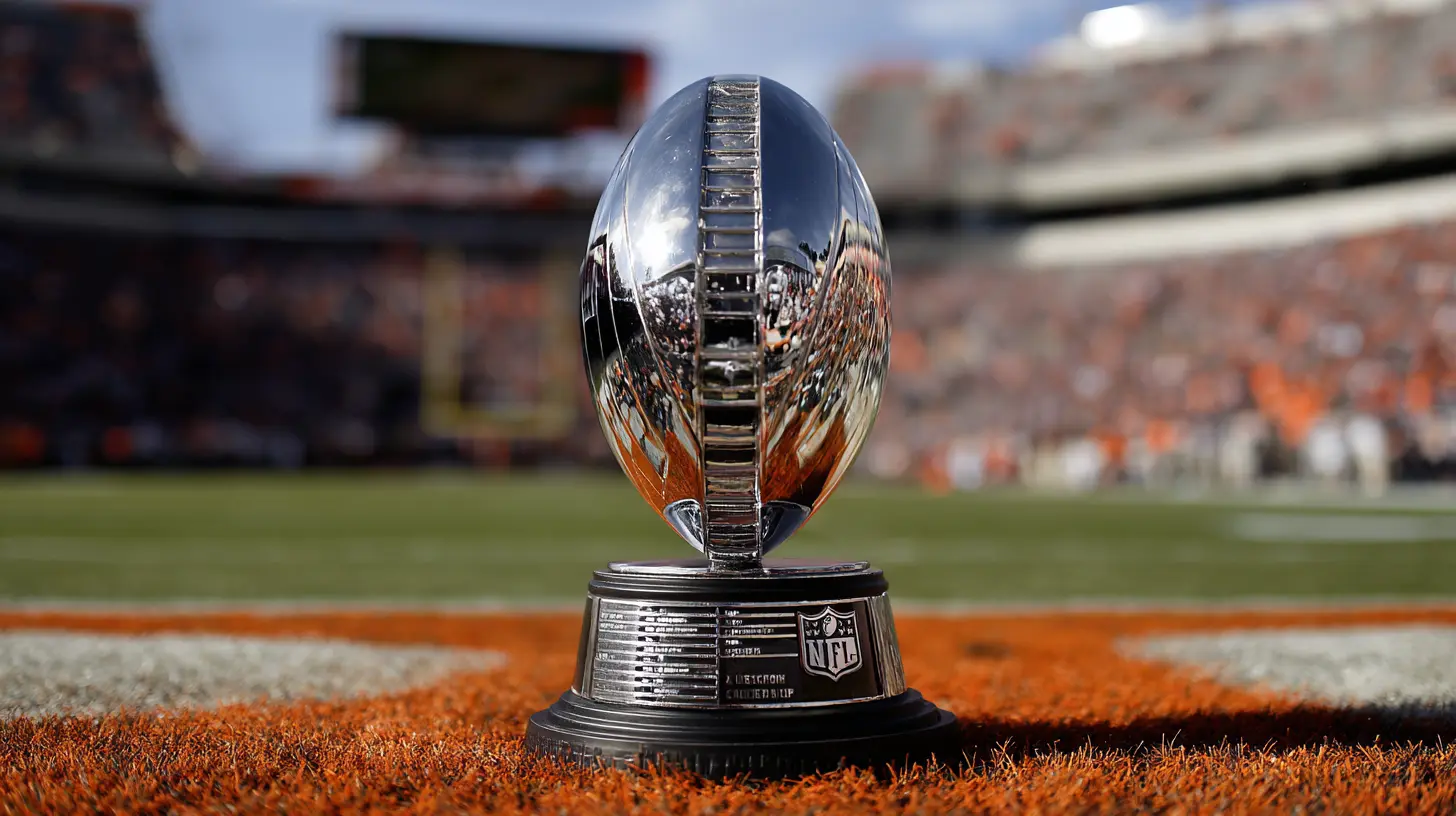
Evaluating the Candidate Archetypes
Rather than naming individuals, which would require speculation about hires, firings, and health that no one can predict, it is more useful to evaluate the types of coaches most likely to hold the key. Each archetype has real strengths and real risks.The Proven Champion
The coach who has already won it all brings credibility, playoff experience, and a template. Players listen differently to someone with a ring. The trade-off: proven champions are expensive, often rigid in their methods, and sometimes inherited success from a previous roster. If a proven champion takes over a talented but undisciplined team, the fit can be excellent. If he takes over a rebuilding team, the marriage often ends badly.When to bet on this archetype: a roster one piece away, with veterans who need structure and belief.
The Ascending Innovator
This is the young coach with a modern scheme, strong development results, and a willingness to experiment. Innovators tend to raise a team's floor quickly because their systems create easy advantages. The risk is playoff inexperience. Innovative schemes get tested and countered in a seven-game series, and young coaches sometimes lack the emotional steadiness to manage a locker room through a losing streak in May or June.When to bet on this archetype: a young roster with a long window, where development matters more than immediate results.
The Culture Rebuilder
Some coaches specialize in changing how an organization operates: standards, conditioning, accountability, communication. They rarely win immediately, but they create the conditions for someone else, or themselves, to win later. The 2027 connection is direct: teams that hired culture rebuilders two or three years ago may be entering their competitive phase right as the 2027 title is decided.When to bet on this archetype: a franchise recovering from dysfunction, where talent exists but belief does not.
The Tactical Specialist
A smaller group of coaches wins through scheme genius: creative offenses, disguised defenses, matchup exploitation. These coaches produce regular-season excellence reliably. The open question is always whether their systems hold up when opponents have a full series to prepare. History suggests tactical specialists need a strong lieutenant for culture and motivation, or a roster with self-motivated veterans.When to bet on this archetype: a veteran roster with high basketball or football IQ that can execute complex plans without hand-holding.
Common Mistakes in Projecting Championship Coaches
Overweighting the most recent playoff result. A single series loss or win tells you less than a three-year pattern. Recency bias is the most common error in coaching analysis.Confusing regular-season success with playoff readiness. Regular seasons reward depth and system discipline. Playoffs reward star power, adjustment speed, and composure. A coach can be excellent at one and average at the other.
Ignoring assistant coaching turnover. Championship staffs are raided. If a coach's key assistants left in the past two offseasons, his 2027 outlook is weaker than his record suggests.
Assuming talent guarantees contention. Rosters age, chemistry fractures, and injuries accumulate. Coaching quality matters most precisely when talent alone is insufficient.
Judging culture from interviews. Players say positive things about coaches almost universally. Real signals come from behavior: who gets benched, who gets traded, and how players respond to public criticism.
What to Watch Over the Next Two Seasons
If you want to identify the coach who holds the key to 2027 before the consensus forms, track these indicators.Year-over-year improvement in close games. Coaches who win tight games consistently are demonstrating preparation and composure. A two-season trend in one-score or late-game outcomes is more predictive than point differential alone.
Development of second and third-year players. The 2027 core is likely already on rosters, in development. Watch which coaches are extracting real leaps from young players.
How the coach handles the first crisis. Every season brings a losing streak, an injury to a key player, or a locker room flare-up. The coach's response, whether he tightens rotations, changes schemes, or steadies the message, reveals more than any winning streak.
Staff retention and pipeline. Coaches who consistently produce assistants who get head coaching jobs are usually running strong programs. It signals teaching quality and organizational health.
Contract and organizational stability. A coach entering a contract year without an extension is a coach whose 2027 prospects are uncertain, regardless of talent. Stability is a precondition, not a bonus.
A Balanced Answer to the Central Question
So which coach holds the key to a 2027 championship? The most defensible answer is this: the coach whose four pillars align with an organization entering its competitive window, supported by front office alignment, cap flexibility, and ownership patience. In practice, that will probably be a coach who has already demonstrated adaptability and development, is entering his third or fourth year with the same roster, and works for an organization that resisted the urge to reset prematurely.If forced to choose an archetype rather than a name, the ascending innovator with a stable front office is the most common profile among recent champions across sports. But the culture rebuilder in year three or four is the sleeper, and the proven champion is the safest bet when a roster is one piece away. Each path is valid. The mistake is choosing a name without checking the conditions around it.
For fans, the practical takeaway is to stop asking who the best coach is and start asking which coach is best positioned. For organizations, the takeaway is that championship coaching is built, not hired. The coach who wins in 2027 is, in most cases, the one an organization decided to keep in 2024.
all images in this post were generated using AI tools
Category:
Game PredictionsAuthor:

Everett Davis

