Why 2026 May See a Shift Toward Domestic Talent in Big Leagues
16 October 2026
Something is changing in the way big leagues think about where players come from. For most of the past three decades, the smartest organizations treated talent as a global commodity. If a shortstop could be found in the Dominican Republic for a fraction of the price of a comparable American player, you signed the Dominican shortstop. If a left-handed pitcher in Japan threw strikes at a level that projected well to Major League Baseball, you posted the money and brought him over. The logic was clean and it worked. So why would that logic start to bend in 2026?
The answer is not that international players suddenly became less valuable. It is that the costs, risks, and rules surrounding their acquisition have shifted at the same time that the domestic pipeline has gotten cheaper, faster, and more controllable. When several variables move at once, the optimal strategy changes. That is what is likely happening now, and 2026 is the year the effects may become visible in roster construction, draft strategy, and trade behavior across the major North American leagues.
This article examines why this shift is plausible, where it will show up first, where it will not, and what teams and fans should watch for. It also addresses the common misreading of this trend, because the shift is not a retreat from global scouting. It is a recalibration of risk.

The Economics That Made Global Talent Dominant
To understand why a reversal is possible, you have to understand why the original strategy was so powerful.The arbitrage at the heart of international signing
For years, international amateur signings offered a form of arbitrage. A 16-year-old prospect from Venezuela or the Dominican Republic could be signed for a bonus that was often a small fraction of what a comparable American high school player would command in the draft. The team gained control of the player's rights for years. Development happened in the team's own academies. The player reached the majors, in many cases, at a younger age than a college draftee would.That arbitrage worked for three reasons. First, the talent pool was large and underexploited. Second, the signing rules capped spending in ways that let disciplined teams get more value per dollar. Third, the developmental infrastructure in Latin America was cheaper to build and operate than equivalent infrastructure in the United States.
None of that has disappeared. But arbitrage opportunities erode when everyone recognizes them. By the 2010s, every club had a robust international operation. Bonuses for top international amateurs climbed into the millions. Competition for the best 16-year-olds became fierce, and the margins compressed.
Why it still made sense anyway
Even with compressed margins, international talent remained attractive because of a simple fact: the domestic pipeline is expensive in different ways. American amateur players have leverage. They can go to college. They can use the transfer portal. They can threaten to return to school. They have agents, advisors, and, in the case of two-sport athletes, genuine alternatives. That leverage raises the effective price of signing them and complicates development because the team does not fully control the player's environment.International players, by contrast, often sign young enough that the team shapes nearly every aspect of their baseball or basketball or hockey education. That control is worth a lot. It reduces uncertainty. It allows for a coherent development plan.
So the old model was not just about cheap labor. It was about control and certainty. Any shift away from it would require those advantages to shrink.
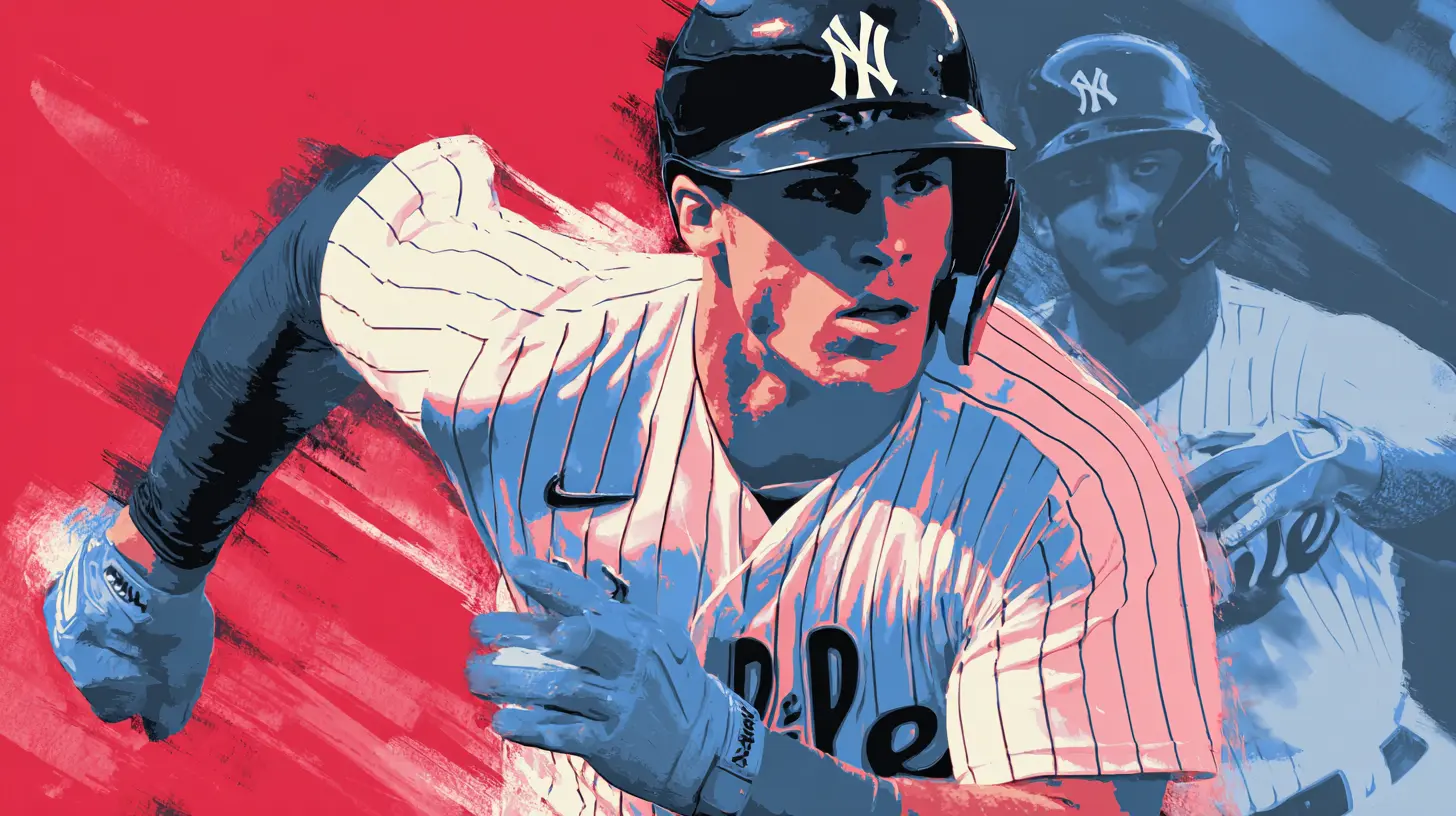
What Is Changing as 2026 Approaches
Several forces are converging that could reduce the relative appeal of international acquisition and increase the appeal of domestic talent. Not all of them are new. What is new is that they are arriving together.Rule changes and their unintended consequences
Leagues have been tinkering with rules that affect how young talent is acquired and retained. In baseball, changes to the international signing system, including the possibility of an international draft, have been discussed for years. Whether or not such a draft arrives by 2026, the uncertainty itself changes behavior. Teams that fear losing the ability to sign 16-year-olds cheaply may front-load their international spending or shift resources toward the domestic draft, where the rules are more stable.In basketball, the rise of the G League Ignite and similar pathways, along with changes to draft eligibility and name, image, and likeness rules in college sports, has altered the calculus for American prospects. Players who once had to choose between a one-and-done college year and an overseas professional season now have domestic professional options that keep them in front of NBA scouts. That keeps more American talent at home and makes it easier for teams to evaluate them in familiar settings.
In hockey, the Canadian Hockey League and NCAA pathways have always been strong, but the NCAA's recent allowance of name, image, and likeness compensation has made the college route more attractive relative to major junior and European professional leagues. That is a domestic shift by definition.
The common thread is that rules and compensation structures are making domestic development more competitive with international alternatives.
The cost of international scouting and development has risen
Building and maintaining an international scouting network is not cheap. You need full-time staff in multiple countries, academies, housing, nutrition, language support, and compliance infrastructure. As more clubs invest, the cost of the best personnel rises. The same dynamic that made international scouting a bargain in the 1990s has made it a significant line item in the 2020s.Meanwhile, domestic scouting has become more efficient. Video, biometrics, and data analytics allow teams to evaluate American amateur players with greater precision and less travel. The marginal cost of finding a useful domestic player has fallen, even as the cost of finding an equivalent international player has risen.
The domestic talent pool is deeper than it has ever been
This is the part that gets overlooked. The United States produces more baseball, basketball, and hockey players than it did 30 years ago, and the quality of coaching, strength training, and skill development available to American youth has improved dramatically. Travel ball, private instruction, and year-round training have their critics, and some of that criticism is fair. But the result is a domestic talent pool that is deeper and more polished at younger ages than in the past.In baseball, the rise of velocity in American high school and college pitchers is well documented. In basketball, the number of skilled big men and versatile wings coming out of American high schools and colleges has grown. In hockey, American development programs have produced a steady stream of first-round picks who would have been unthinkable 25 years ago.
A deeper domestic pool means teams do not have to look abroad for as many roster spots. They can fill more of them at home, often with players who have been scouted more thoroughly and who fit the team's culture and system more predictably.
Geopolitical and logistical friction
It would be naive to ignore the broader environment. Visa processing, travel restrictions, and political instability in some talent-producing regions can disrupt international pipelines. A club that relies heavily on one country for talent exposes itself to risks that are hard to hedge. Domestic talent carries no such exposure.This is not a reason to abandon international scouting. It is a reason to diversify. And diversification, in practice, often means leaning more on domestic sources.

Where the Shift Will Show Up First
If a shift toward domestic talent is coming, it will not happen everywhere at once. It will appear first in specific contexts where the economics and rules line up.The draft and amateur acquisition
The most likely place to see change is in how teams allocate draft capital and amateur signing bonuses. If international signing becomes more regulated or more expensive, teams will redirect some of that spending toward the domestic draft. That could mean more aggressive drafting of high school players, more willingness to pay above slot, and more emphasis on developing players from the college ranks.This is not a zero-sum switch. Teams will still sign international amateurs. But the marginal dollar may increasingly go to domestic players, because that is where the rules are most predictable and the evaluation is most reliable.
Roster construction at the margins
The back end of a roster is where cost control matters most. A team that can fill its bench, bullpen, or fourth line with domestic players on minimum salaries has more flexibility to spend on stars. If domestic players are more readily available and more predictable, teams will use them to fill those roles rather than signing international free agents who require longer commitments and higher guarantees.This is already happening in some leagues. In baseball, the rise of the multi-inning reliever and the emphasis on depth has led teams to develop more homegrown pitchers rather than sign expensive international relievers. In basketball, the two-way contract and the increased use of the G League have created a domestic pipeline for end-of-roster players. In hockey, the fourth line is increasingly populated by players developed in North American systems.
Trade and free agent behavior
If domestic talent becomes more valuable, it becomes more valuable as a trade asset. Teams may be more reluctant to trade young domestic players, and more willing to trade international players whose acquisition cost was lower. That changes the trade market in subtle ways. It also changes free agency, because teams that develop domestic talent have more internal options and less need to sign expensive veterans from abroad.
The Counterarguments, and Why They Matter
A shift toward domestic talent is plausible, but it is not inevitable. There are strong reasons to think international scouting will remain central to how big leagues operate.The talent is still there
The best players in the world are not all in the United States. Shohei Ohtani, Ronald Acuna Jr., and dozens of other stars were signed internationally. Ignoring that talent would be self-defeating. Any team that overcorrects toward domestic players and neglects its international operation will lose ground to teams that maintain a balanced approach.Development control still matters
The ability to sign a player at 16 and shape his development for six years is a real advantage. Domestic players often have more leverage and more outside influences. That does not make them worse, but it does make them harder to control. Teams that value predictability may still prefer the international route for certain profiles.The domestic pipeline has its own problems
American youth sports have become expensive and increasingly stratified by income. That limits the talent pool in ways that are not always visible. If domestic development becomes the primary path, teams may find that the pool is shallower than it appears, especially for positions and skills that are expensive to develop.Rules could change again
If the rules shift back in favor of international signing, the economics could flip again. A team that has dismantled its international operation may find it costly to rebuild. Flexibility, not dogma, is the safer posture.Practical Advice for Teams and Analysts
If you work in a front office, cover a league, or run a fantasy team, how should you think about this?For teams
Do not abandon international scouting. Instead, treat domestic and international acquisition as two channels in a portfolio. The goal is not to pick a side. It is to understand the relative cost, risk, and upside of each channel at any given moment, and to allocate accordingly.Invest in domestic development infrastructure. If the domestic pipeline is getting deeper, the teams that can identify and develop that talent most efficiently will have an edge. That means better coaching, better analytics, and better integration between scouting and player development.
Build optionality. Keep enough international presence to react if the rules change, and enough domestic depth to compete if they do not. The teams that win are the ones that can pivot.
For analysts and fans
Be skeptical of simple narratives. A shift toward domestic talent does not mean international players are being pushed out. It means the mix is changing. Look at the underlying economics and rules, not just the headlines.Watch the margins. The most important changes will show up in bench roles, bullpen usage, and late-round draft picks, not in the star players at the top of the roster. Those margins are where strategy lives.
Common Mistakes and Misconceptions
Several misreadings of this trend are worth correcting.Mistake one: Treating it as nationalism
This is not about preferring domestic players for emotional reasons. It is about cost, control, and rules. Teams that frame it as a patriotic choice will make bad decisions. Teams that frame it as a portfolio allocation problem will make better ones.Mistake two: Assuming it applies equally to all leagues
The dynamics differ by sport. Baseball's international system is unique. Basketball's is shaped by the G League and college rules. Hockey's is shaped by the CHL and European professional leagues. A shift in one league does not automatically mean a shift in another.Mistake three: Ignoring the countertrends
Even as domestic talent becomes more attractive, international talent is becoming more accessible in some ways. Improved scouting in Africa and Asia, better data on international players, and more flexible transfer rules could increase the supply of international talent. The two trends can coexist.Mistake four: Overreacting to a single season
A shift is not a one-year phenomenon. It is a slow reallocation of resources. Do not draw conclusions from a single draft or a single free agent class. Look for patterns over three to five years.What to Watch in 2026 and Beyond
If you want to track this shift, here are the indicators that matter.- International signing bonus totals and how they compare to domestic draft spending.
- The number of domestic players on opening day rosters in roles that were previously filled by international free agents.
- Rule changes, especially any move toward an international draft or changes to amateur eligibility.
- The growth of domestic developmental leagues and their impact on roster construction.
- Trade patterns involving young domestic and international players.
None of these indicators alone proves a shift. Together, they tell a story.
A Balanced Conclusion
The most likely outcome is not a dramatic turn away from international talent. It is a gradual rebalancing. Teams will still scour the world for players. They will still sign 16-year-olds in the Dominican Republic and Japan and Venezuela. But they may do so with more caution, and they may allocate more of their resources to domestic pipelines that are deeper, cheaper to evaluate, and more predictable than they were a decade ago.That is not a rejection of global talent. It is a response to changing incentives. The teams that understand this will be the ones that thrive, not because they picked a side, but because they understood the trade-offs and positioned themselves to win either way.
all images in this post were generated using AI tools
Category:
Player TransfersAuthor:

Everett Davis