Why the Achilles Injury Rate Is Climbing in Top Leagues by 2026
6 October 2026
Something strange is happening on football pitches, basketball courts, and tennis hard courts around the world. The Achilles tendon, that thick rope of collagen running down the back of the calf, keeps snapping. Not just in aging veterans winding down their careers, but in players who should be in their physical prime. A 24-year-old winger sprinting into space. A 27-year-old point guard driving the lane. A 29-year-old midfielder pressing high up the pitch.
If you follow elite sport closely, you have probably noticed the pattern. The injury list grows longer each season. The recovery timelines stretch past twelve months. The comebacks often fall short of what the player once was. And the question everyone keeps asking is simple: why now?
This article digs into the forces driving the rise in Achilles ruptures across top leagues. It looks at schedule congestion, playing surface changes, training methodology, biomechanics, footwear, and the uncomfortable truth that modern sport may be optimizing athletes into fragility. If you coach, train, rehabilitate, or simply love watching high-level sport, there is real value in understanding what is going on.
The Achilles Tendon: A Marvel and a Weak Link
Before we get into causes, it helps to understand what the Achilles actually does and why it fails.The Achilles tendon connects the calf muscles, the gastrocnemius and soleus, to the heel bone. It is the strongest tendon in the human body, capable of handling forces many times your body weight during sprinting and jumping. When you push off to sprint, the tendon stores elastic energy and releases it like a spring. That energy return is part of what makes elite athletes look so effortless.
But here is the trade-off. Tendons adapt slowly. Muscles can grow stronger in weeks. Tendons take months, sometimes years, to remodel in response to load. They have poor blood supply compared to muscle tissue. That means when you ramp up training intensity faster than the tendon can handle, you create a mismatch between what the muscle can produce and what the tendon can tolerate.
Think of it like a car with a powerful engine bolted to a transmission built for a smaller motor. The engine keeps getting stronger. The transmission quietly wears down. Eventually something gives.
Why the Numbers Appear to Be Rising
It is worth being careful here. Injury surveillance across leagues is inconsistent. Some competitions publish detailed data. Others do not. Media coverage of Achilles ruptures has increased, which can make the problem feel bigger than it is. But multiple team physicians, physiotherapists, and performance directors have spoken publicly about the trend, and the pattern shows up across men's and women's football, basketball, and tennis.So what is actually driving it? Several factors appear to be converging at the same time.
Schedule Congestion and the Shrinking Offseason
The most obvious culprit is workload. Top leagues have expanded. Domestic cups, continental competitions, international windows, preseason tours, and postseason friendlies all pile onto the calendar. A modern elite footballer can play sixty or more matches in a season. Basketball stars juggle an 82-game regular season with playoffs and international duty. Tennis players chase ranking points across four Grand Slams and a dozen Masters events.The offseason, once a genuine period of rest and rebuilding, has shrunk to a few weeks for many athletes. That matters because tendon recovery and adaptation happen during downtime. Without a proper offseason, the tendon never gets the chance to fully repair the micro-damage accumulated over months of competition.
There is also the travel factor. Long-haul flights, time zone shifts, and disrupted sleep wreck recovery hormones. Cortisol stays elevated. Growth hormone and testosterone dip. Tendons, which rely on these hormonal signals for repair, suffer.
The Rise of High-Intensity, Stop-Start Sports Science
Modern training has become extremely sophisticated. GPS tracking, heart rate variability, force plates, and velocity-based training allow coaches to push athletes to precise thresholds. The result is that players are faster, more explosive, and more powerful than ever.But here is the catch. Explosive movement is exactly what loads the Achilles most. Sprinting, cutting, jumping, and decelerating all place enormous strain on the tendon. A player who is 5 percent faster and 8 percent more powerful than a decade ago is also producing significantly higher peak forces through the same tendon.
Strength coaches often talk about building "robustness." But robustness is not just about muscle. It is about tendon stiffness, collagen cross-linking, and the ability to absorb and redirect force. Many programs still prioritize muscle hypertrophy and power output over tendon-specific conditioning. That is a mistake.
Playing Surfaces and Footwear
Surfaces matter more than most fans realize. Hard courts in tennis and basketball are unforgiving. They return energy to the body rather than absorbing it. Artificial turf, increasingly common in football, behaves differently from natural grass. It can be faster, and its shock absorption varies depending on age, infill, and temperature.Footwear plays a role too. Modern boots and shoes are lighter than ever. That sounds great for speed. But lighter often means less cushioning and less structural support. Some designs also feature aggressive studs or traction patterns that lock the foot in place. When the foot cannot rotate or slide slightly during a high-speed movement, the torque transfers up the chain to the ankle and the Achilles.
There is no single "bad" shoe or surface. The issue is that athletes often switch between surfaces and footwear without giving their tendons time to adapt. A player who trains on grass all week and then plays on artificial turf on the weekend is asking the tendon to handle a very different load profile.
The Biomechanics of Failure
Achilles ruptures rarely happen out of nowhere. They usually follow a period of warning signs: stiffness in the morning, soreness after training, a feeling of tightness that never quite goes away. These are signs of tendinopathy, a degenerative process that weakens the tendon over time.When the tendon finally ruptures, it is often during a specific movement. Pushing off to sprint. Landing from a jump. Changing direction at speed. The classic mechanism is a forceful contraction of the calf muscle while the tendon is already stretched, a movement pattern common in sports like football, basketball, and tennis.
Poor ankle mobility, weak calf endurance, and inadequate hip stability all contribute. If the ankle cannot dorsiflex properly, the tendon takes more load. If the calf fatigues, the tendon absorbs more force. If the hip fails to control rotation, the lower leg compensates in ways that stress the tendon.
The Age Factor and the "Prime Years" Myth
Conventional wisdom says Achilles injuries happen to older athletes. That is partly true. Tendons lose elasticity with age, and blood supply diminishes. But the rise in ruptures among players in their mid-twenties suggests something else is going on.One theory is that athletes today reach peak physical output earlier. A 22-year-old footballer in a top league may already have played 200 professional matches. That is a lot of cumulative load on a tendon that is still maturing. The tendon may look healthy on imaging, but its microstructure is already compromised.
Another factor is the pressure to return from minor injuries quickly. A player with Achilles tendinopathy who returns to full training too soon risks turning a manageable problem into a rupture. Painkillers and anti-inflammatory injections can mask symptoms, allowing the athlete to push through warning signs that would otherwise force rest.
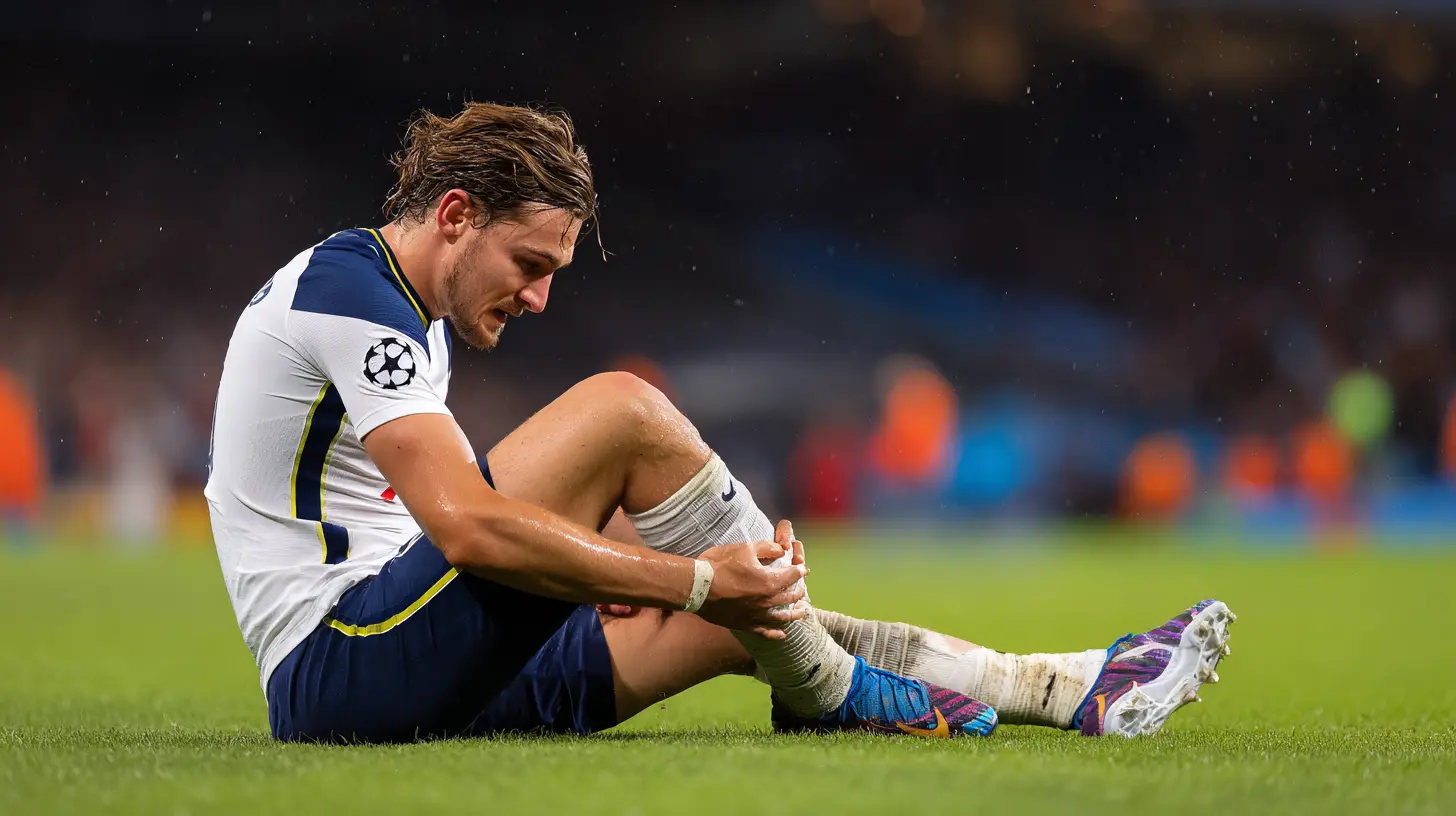
What Teams and Players Get Wrong
There are several common mistakes that keep showing up.Mistake 1: Treating Tendon Pain as a Minor Issue
Tendon pain is often dismissed as "just tightness" or "a bit of soreness." Players are encouraged to run it off. Coaches see a player grimacing and tell them to push through. But tendon pain is a signal that the tissue is struggling to cope. Ignoring it is like ignoring the check engine light on your car.Mistake 2: Overreliance on Passive Treatments
Massage, foam rolling, ultrasound, and electrotherapy feel good. They can reduce pain temporarily. But they do not change the tendon's capacity to handle load. The only thing that reliably strengthens a tendon is progressive loading over time. Passive treatments without a structured strength program are a waste of time and money.Mistake 3: Skipping Eccentric and Isometric Work
Eccentric exercises, where the muscle lengthens under load, have strong evidence for tendon rehabilitation. Isometric holds, where the muscle contracts without moving, can reduce pain and build early strength. Yet many programs still focus on concentric work, like calf raises, which loads the tendon less effectively.Mistake 4: Returning to Sport Too Fast
The temptation to return quickly is enormous. Careers are short. Contracts depend on playing time. But tendons heal slowly. A premature return to high-speed running or jumping is one of the most common pathways to rupture.What Actually Works: Best Practices for Prevention
If you want to protect the Achilles, the approach needs to be systematic. Here is what the evidence and practical experience suggest.Build a Tendon-Focused Strength Base
Calf raises are a start, but they are not enough. You need heavy, slow resistance training that targets the tendon specifically. That means:- Eccentric heel drops off a step, performed slowly and controlled.
- Isometric holds with a loaded barbell or machine, held for 30 to 45 seconds.
- Seated calf raises to target the soleus, which is often neglected.
- Plyometric progressions that build from low-intensity hops to high-intensity bounding.
The key is progression. You cannot jump from basic calf raises to depth jumps in a week. Tendons need time.
Manage Load Intelligently
Acute to chronic workload ratios matter. If a player's training load spikes suddenly, injury risk rises. Coaches should track not just total distance but high-speed running, sprint distance, and deceleration counts. These metrics correlate more closely with tendon stress than total distance alone.Prioritize Sleep and Nutrition
Collagen synthesis peaks during deep sleep. Athletes who sleep less than seven hours per night show impaired tendon healing. Nutrition matters too. Adequate protein, vitamin C, and gelatin with vitamin C before loading sessions may support collagen production. Hydration affects tendon stiffness and elasticity.Use Footwear and Surfaces Wisely
Rotate footwear. Avoid wearing the same boots or shoes for every session. Give the tendon different load profiles. On artificial turf, consider boots with more cushioning and less aggressive studs. On hard courts, replace shoes before the midsole breaks down.Respect the Offseason
This is the hardest one for elite athletes. But a genuine offseason, even four to six weeks of reduced load, allows the tendon to remodel. Players who skip it year after year are borrowing against their future.
The Rehabilitation Reality
If a rupture does happen, the road back is long. Surgical repair is common in elite athletes, though non-surgical management is sometimes used. Either way, rehabilitation takes nine to twelve months. The first phase focuses on protecting the repair. The second phase rebuilds strength. The third phase restores power and sport-specific movement.The psychological toll is often underestimated. Players describe fear of re-rupture, frustration with slow progress, and anxiety about losing their place in the team. Mental health support during rehab is not optional. It is essential.
What the Future Might Hold
By 2026, we may see several changes. Wearable technology could provide real-time tendon load monitoring. Advanced imaging might detect early degeneration before symptoms appear. Gene therapy and biologics could speed healing. But none of these will replace the fundamentals: smart training, adequate rest, and respect for the tendon's limits.Leagues may also be forced to address schedule congestion. Player unions are already pushing back. If the trend continues, we could see mandated rest periods, squad rotation rules, or limits on matches per season.
Practical Takeaways for Coaches and Athletes
If you take nothing else from this article, take these points:- Achilles injuries are rising because of a mix of workload, training intensity, surface and footwear changes, and insufficient recovery.
- Tendons adapt slowly. You cannot rush them.
- Pain is a warning. Do not ignore it.
- Strength work must be progressive and tendon-specific.
- Sleep, nutrition, and offseason rest are not luxuries. They are part of the program.
- Return to sport should be gradual and criteria-based, not calendar-based.
A Final Word
The Achilles tendon is a remarkable structure. It allows humans to run, jump, and change direction with power and grace. But it is not indestructible. The modern sporting calendar, combined with the pursuit of ever-greater speed and power, has pushed it to the brink.The rise in ruptures is not a mystery. It is a predictable outcome of choices made at every level of sport. The good news is that those choices can change. With smarter training, better recovery, and a willingness to prioritize long-term health over short-term performance, we can reverse the trend.
The athletes of 2026 and beyond deserve better. So does the tendon that carries them.
all images in this post were generated using AI tools
Category:
Injury UpdatesAuthor:

Everett Davis